

Ever wondered why your bench press isn't giving you the results you want? It might be because of your technique. Learning the right way to bench press is key to getting better and staying safe. This guide will show you the basics of bench press technique and safety, helping you get the most out of this powerful exercise.
The bench press is a key exercise that works many muscles. It mainly targets the chest, triceps, and shoulders. But it also works the back and glutes for stability. After a pec tear, it took seven years to learn the right muscles and improve my technique.
Experts like Ben Esgro, Mike Zourdos, and USA Powerlifting coach Matt Gary helped me. Their knowledge is the foundation of this detailed guide.
Getting your feet right is important for power in the bench press. Keeping your lower back arched helps keep your spine straight. Adjust your grip width based on your body and goals. Wider grips are good for longer arms and powerlifting, while narrower grips are better for shorter arms and muscle growth.
Breathing and bracing right are key for staying stable and strong. These techniques help you perform better.
Key Takeaways
- Proper form engages chest, triceps, shoulders, back, and glutes
- Foot placement and back arch are crucial for power and stability
- Grip width should be tailored to body type and goals
- Correct breathing and bracing techniques enhance performance
- Common mistakes include bouncing the bar and improper elbow positioning
- Wrist wraps can help maintain proper wrist alignment
- A balanced approach to grip width optimizes strength and safety
Understanding the Fundamentals of Bench Press
The bench press is a key exercise in strength training. It's great for building upper body strength. It helps improve your bench press and fitness. Let's explore the important parts of this lift.
What Muscles Does the Bench Press Work
The bench press works many muscles in the upper body. It mainly targets:
- Chest (Pectoralis major)
- Shoulders (Anterior deltoids)
- Triceps
It also works the upper pectoralis major in incline presses. And it strengthens the triceps brachii with narrow grips.
Benefits of Proper Bench Press Form
Learning proper bench press form is key. It helps you get the most out of the exercise and stay safe. Important points include:
- Positioning eyes directly under the bar
- Retracting shoulder blades for stability
- Maintaining a grip just wider than shoulder-width
- Keeping hips on the bench throughout the movement
Role in Strength Training Programs
The bench press is essential in strength training. It's a main lift in powerlifting. It offers many benefits for fitness:
| Benefit | Impact |
|---|---|
| Muscle Mass | Increases upper body muscle |
| Fat Reduction | Helps reduce body fat |
| Metabolism Boost | Can increase metabolism by up to 15% |
| Bone Health | Improves bone density |
For beginners, start with 5-8 sets of 3 reps. This helps build bench press strength safely. Always focus on proper technique. Working with a trainer can help you improve your form.
Essential Equipment and Setup Requirements
Setting up your bench press correctly is key for safety and performance. A good setup lowers injury risk and boosts muscle use. Let's look at the must-have equipment and setup for a great bench press workout.
Bench and Rack Setup
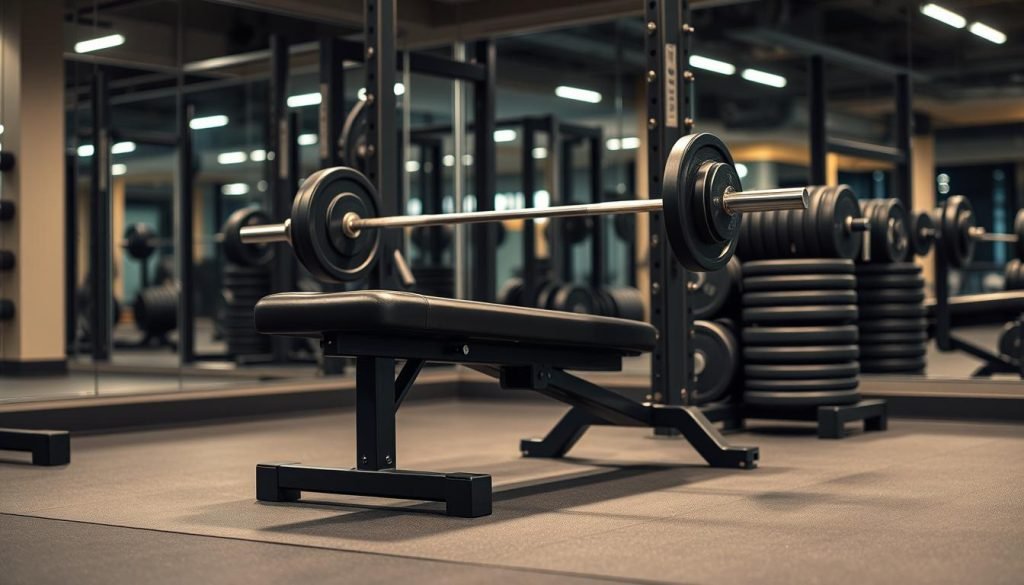
A sturdy flat bench and a power rack with adjustable safety pins are the base for a safe bench press. The bench should fit your shoulders well. Adjust the rack height for easy unracking without straining your shoulders.
Safety Equipment Considerations
Safety is top priority in bench press. Use a spotter or safety pins in a power rack to prevent accidents. Recent data shows 1 in 10 people might get hurt from wrong technique. Always put safety first to avoid being part of this number.
Optional Accessories for Better Performance
Boost your bench press with these accessories:
- Wrist wraps for extra support
- Weightlifting belt for core stability
- Chalk for better grip
7 out of 10 people are told to use wrist wraps for safety and better performance. These tools can greatly improve your bench press setup and technique.
| Equipment | Purpose | Recommended Use |
|---|---|---|
| Flat Bench | Provides stable support | Always |
| Power Rack | Ensures safety | Always |
| Wrist Wraps | Supports wrists | For heavy lifts |
| Weightlifting Belt | Stabilizes core | For max efforts |
Remember, the right equipment and setup are crucial for a safe and effective bench press. Spend time getting these basics right to increase your strength and lower injury risks.
How to Bench Press Right: Step-by-Step Instructions
Learning the right way to bench press is key for strong upper body and injury prevention. Here's how to bench press correctly and get the most out of your workouts.
Begin by lying on the bench with your eyes under the bar. Hold the bar wider than your shoulders. This helps keep your forearms straight, easing pressure on your elbows and shoulders.
Next, lift the bar up by straightening your arms. Lower it to your chest, keeping your elbows at a 45-degree angle. This protects your shoulders and rotator cuffs. Push the bar back up, then hold it for a moment before starting again.
Keep your form consistent, no matter the weight. This focus on detail helps you avoid common mistakes and stand out in the gym.
“The bench press is considered one of the best exercises for developing overall upper body strength, working multiple muscle groups including the chest, shoulders, and triceps.”
Beginners should start with the bodybuilding style. This style keeps your back straight and slightly arched. It helps you learn the right technique and avoid shoulder issues.
| Bench Press Style | Back Position | Focus |
|---|---|---|
| Powerlifting | Large arch | Reduced range of motion |
| Bodybuilding | Slight arch | Muscle building |
Always prioritize safety. Use a power rack when bench pressing alone. With practice and focus on form, you'll improve your strength and look.
Proper Body Positioning and Alignment
Getting your body right is key for a good bench press. It helps you use your muscles better and keeps you safe from injuries. Let's look at the important parts of bench press form to boost your strength.
Foot Placement and Leg Drive
Your feet are important for power in the bench press. Place them on the ground, a bit wider than your hips. This stance helps you use your legs, making you stronger and more stable.
Back Arch and Shoulder Position
Having a slight arch in your upper back works your chest better. Pull your shoulder blades back and press them into the bench. This keeps your shoulders safe and helps you lift more powerfully.
Head and Neck Alignment
Keep your head and neck straight during the lift. Make sure your head stays on the bench. This keeps your neck muscles relaxed and your form correct.
| Body Part | Correct Positioning | Benefits |
|---|---|---|
| Feet | Flat on floor, wider than hip-width | Stability and leg drive |
| Back | Slight arch in upper back | Chest muscle activation |
| Shoulders | Retracted and pressed into bench | Improved stability and power transfer |
| Head/Neck | Neutral, in contact with bench | Reduced strain, proper form |
Focus on these body positioning tips for better bench press skills. Everyone's body is different, so try different things to find what works best for you. With practice, you'll get stronger and use your muscles more effectively.
Mastering the Grip and Hand Placement

Getting your bench press grip right is key for good performance and safety. The standard grip has hands shoulder-width apart, great for beginners and general workouts. This balanced grip is the base of proper bench press technique.
Where you place your hands affects which muscles you work. A close grip works your triceps, while a wide grip targets your chest. Find what feels right for you, but keep your elbows at 45 degrees to avoid shoulder pain.
Keeping your wrists straight is important. This helps prevent injuries and makes your lift stronger. Hold the bar tight with your thumbs wrapped around for stability.
Grip Variations and Their Effects
| Grip Type | Hand Placement | Primary Muscles Targeted | Best For |
|---|---|---|---|
| Standard | Shoulder-width apart | Chest, Triceps, Shoulders | Beginners, General Strength |
| Close | Closer than shoulder-width | Triceps, Inner Chest | Arm Strength, Tricep Development |
| Wide | Wider than shoulder-width | Outer Chest, Front Deltoids | Chest Development, Bodybuilding |
To get the most out of your bench press, start with hands just outside shoulder-width. Make sure your thumbs are in the right spot for a strong grip. Don't grip too hard, as it can hurt your forearms and wrists. If your hands are sweaty, chalk can help keep them stable.
“The bench press grip is not one-size-fits-all. It's about finding what works best for your body type and goals.”
Mastering your bench press grip takes time and effort. Pay attention to how different hand placements feel and affect your lift. Focus on proper form to improve muscle engagement, safety, and your overall bench press performance.
Breathing and Bracing Techniques
Learning how to breathe and brace properly is key for a strong bench press. These skills help you stay stable, increase your power, and lift more efficiently.
Proper Breathing Pattern
A good breathing pattern is vital for bench press success. Start by taking a deep breath before lifting the bar. Then, take another deep breath as you lower it.
Hold your breath as you start to push the bar up. Finally, exhale hard when you hit the toughest part of the lift.
Core Engagement Methods
Engaging your core is essential for a solid bench press. Imagine filling your diaphragm with air to make your midsection rigid. This is called the Valsalva maneuver.
It helps protect your spine and reduces pressure on your lower back during heavy lifts.
Maintaining Tension Throughout the Lift
Keeping your whole body tense is crucial for a strong bench press. Make sure your legs are engaged and your feet are pushing into the floor. Also, keep your upper back tight throughout the lift.
This total-body approach will greatly enhance your bench press technique.
| Breathing Phase | Action | Purpose |
|---|---|---|
| Before unracking | Deep breath | Initial stability |
| Before lowering | Another deep breath | Core bracing |
| Descent and initial push | Hold breath | Maintain pressure |
| Sticking point | Forceful exhale | Power through lift |
Common Bench Press Mistakes and Corrections
Learning the right way to do a bench press is key for good performance and safety. Let's look at common mistakes and how to fix them for a better workout.
Form Errors to Avoid
Many lifters make mistakes that can slow progress or cause injury. Here are some errors to watch out for:
- Bouncing the bar off the chest
- Flaring elbows excessively
- Using a thumbless grip
- Lifting buttocks off the bench
- Overarching the back
- Rolling shoulders forward at the top
Technical Fixes for Better Performance
To get better at bench press technique:
- Control the eccentric movement
- Keep elbows tucked at about 75 degrees
- Use a full grip with thumbs around the bar
- Maintain three points of contact: head, upper back, buttocks
- Retract your scapula for shoulder protection
- Focus on a smooth, controlled motion throughout
Safety Considerations
Keep bench press safety in mind with these tips:
- Use proper safety equipment like a power rack
- Always have a spotter when lifting heavy
- Start with lighter weights to perfect form
- Listen to your body and avoid overexertion
| Common Mistake | Correction | Safety Benefit |
|---|---|---|
| Flaring elbows | Tuck elbows at 75° | Reduces shoulder stress |
| Thumbless grip | Full grip with thumbs | Prevents bar slips |
| Bouncing bar | Control descent | Avoids chest injuries |
| Lifting buttocks | Keep three points of contact | Maintains stability |
Progressive Overload and Training Strategies
To get stronger at bench press, you need a smart training plan. Progressive overload is essential for getting better. It means slowly increasing the challenge for your muscles without big changes in your routine.
Here are some tips to increase your bench press strength:
- Increase weight: Add 5-10 lbs each week, especially if you're new to lifting
- More reps: Push for extra repetitions with the same weight
- Additional sets: Bump up your total volume
- Slower tempo: Increase time under tension
- Reduce rest time: Shorten breaks between sets
Keep changes small, about 10%, to avoid injuries. For example, if you're lifting 200 lbs, aim for 220 lbs next. This slow increase lets your body adapt safely.
Always keep proper form. Never sacrifice technique for heavier weights. This keeps you safe and ensures you're working your muscles right. As you get better at increasing bench press, track your progress. This helps you know when to increase the challenge in your workouts.
“Progressive overload is the gradual increase of weight, frequency, or number of repetitions in your strength training routine. This challenge is the key to continued improvement.”
Stick to these strategies to see steady gains in your bench press. Remember, progress takes time and patience. Stay committed, eat right, and rest well. Your bench press numbers will go up, showing your growing strength and dedication.
Bench Press Variations and Alternatives
A good bench press workout includes different exercises to work on various muscles. This helps avoid getting stuck in a routine. Let's look at some effective bench press variations and alternatives to make your chest day more exciting.
Close-Grip Bench Press
The close-grip bench press focuses more on your triceps. By moving your hands closer together, you work your arms harder while still engaging your chest. It's a great way to build strength in your upper body.
Incline and Decline Variations
Changing the angle of your bench targets different chest areas:
- Incline bench press: Works your upper chest and front deltoids
- Decline bench press: Focuses on your lower chest muscles
These variations add variety to your workout and help shape a well-defined chest. The incline can be set from 10 to 70 degrees. Most lifters find 30-45 degrees ideal.
Dumbbell Alternatives
Dumbbells bring unique benefits to chest training. They allow for more movement and help balance muscle strength. Dumbbell chest press variations include flat, incline, and decline presses, as well as dumbbell flyes.
Here's a comparison of different bench press variations and their primary muscle focus:
| Exercise | Primary Muscles Targeted | Recommended Sets x Reps |
|---|---|---|
| Standard Bench Press | Chest, Triceps, Front Deltoids | 3 x 12 |
| Close-Grip Bench Press | Triceps, Inner Chest | 3 x 12 |
| Incline Bench Press | Upper Chest, Front Deltoids | 3 x 12 |
| Decline Bench Press | Lower Chest | 3 x 12 |
| Dumbbell Fly | Chest, Shoulders, Upper Back | 3 x 12 |
By adding these bench press variations to your routine, you'll get a comprehensive chest workout. It targets all parts of your chest and supporting muscles.
Conclusion
Learning how to bench press right is a game-changer for your fitness journey. This exercise works many muscles and joints. It's great for building strength and muscle.
With the right equipment and proper form, you're set for success. Remember, the details matter. Keep your feet planted and arch your back slightly.
Grip the bar just right. Avoid common mistakes like excessive elbow flaring or skipping chest touches. These small changes can lead to big gains and prevent injuries.
The bench press is for everyone, from powerlifters to baseball players. It's not just about lifting weight. It's about building a stronger upper body.
So, grab that barbell, set up your bench, and get ready to press your way to new strength milestones!
FAQ
What muscles does the bench press work?
The bench press works the chest, front shoulders, and triceps. It also uses the serratus anterior and core for stability.
How wide should my grip be on the barbell?
Your grip should be slightly wider than your shoulders. This helps keep your forearms vertical. Adjust based on your arm length and goals.
How can I increase my bench press strength?
Increase your bench press strength by adding weight, reps, or sets gradually. Try different rep ranges and exercises. Don't forget proper nutrition and rest.
What are some common bench press mistakes to avoid?
Avoid bouncing the bar, flaring elbows too much, and lifting your buttocks. Focus on controlled movements and proper form.
How should I breathe during a bench press?
Breathe deeply before starting, then again as you lower the bar. Hold your breath during the descent. Exhale when you push through the sticking point.
What equipment do I need for a proper bench press setup?
You'll need a sturdy bench, barbell, plates, and a power rack. Wrist wraps and a weightlifting belt are optional.
Are there any bench press variations I can try?
Yes, try close-grip, incline, decline, and dumbbell bench presses. These target different muscles and can help you progress.
How important is proper form in bench pressing?
Proper form is key for muscle engagement, injury prevention, and better performance. It ensures efficient lifting and prevents mistakes.
Should I use a spotter when bench pressing?
Yes, a spotter is recommended for heavy lifts. If not available, use a power rack with safety pins.
How often should I incorporate bench press into my workout routine?
Bench press frequency varies based on your program and goals. Aim for 1-3 times a week. Adjust based on your experience and recovery.
Source Links
- https://shop.bodybuilding.com/blogs/training/the-proper-form-to-bench-press-more-weight?srsltid=AfmBOoqXjpZ38nRbd7OO_uoDHMTsEKIDeU79CK7QGyRB-4BrGIUioCkP
- https://builtwithscience.com/fitness-tips/how-to-properly-bench-press/
- https://columbiaassociation.org/gyms-fitness/how-to-bench-press-for-beginners/
- https://www.webmd.com/fitness-exercise/how-to-bench-press
- https://shop.bodybuilding.com/blogs/training/the-proper-form-to-bench-press-more-weight?srsltid=AfmBOoqIKcRhejPMON_75zPiwBGi6QxjC4Tp7bBDMouhRsv0snzNLetq
- https://stronglifts.com/bench-press/
- https://caliberstrong.com/blog/how-to-bench-press/
- https://www.menshealth.com/fitness/a25126689/how-to-bench-press/
- https://shop.bodybuilding.com/blogs/training/the-proper-form-to-bench-press-more-weight?srsltid=AfmBOoq55XfgQ2C90jdvgP0fQCp_O1yhOQ1J2yYKGlCe1S9b2aR8pWj_
- https://builtwithscience.com/fitness-tips/bench-press-form/
- https://powertec.com/blogs/power-up-blog/mastering-the-correct-bench-press-grip-tips-for-safe-and-effective-training?srsltid=AfmBOoqCtOdvFTJ003gXbimTRBbkBgY_ECY50LH9CtTQzIFYE5QVX-h2
- https://shop.bodybuilding.com/blogs/training/the-proper-form-to-bench-press-more-weight?srsltid=AfmBOoqj9YvG8O_HXj3V0lQCC4ygQGKiMk4P4dcNWQrHOuGneWDcV_K0
- https://www.major-lutie.com/blogs/wiki/how-to-grip-during-the-bench-press-mastering-the-fundamental-technique-for-maximum-gains?srsltid=AfmBOor52Ug_tzgIqR4tHhH7PNSVz5dJ6-37Gp87_9wJhhrt50llhkyA
- https://www.menshealth.com/uk/how-tos/a755647/how-to-master-the-bench-press/
- https://powerliftingtechnique.com/breathe-correctly-bench-press/
- https://barpathfitness.com/blog/breathing-and-bracing/
- https://barbend.com/common-bench-press-mistakes/
- https://builtwithscience.com/fitness-tips/barbell-bench-press/
- https://www.boxrox.com/12-biggest-bench-press-mistakes/
- https://bootylabinc.com/progressive-overload-with-bench-press/
- https://builtwithscience.com/fitness-tips/progressive-overload-techniques/
- https://barbend.com/progressive-overload/
- https://www.healthline.com/health/fitness-exercise/bench-press-alternative
- https://www.opexfit.com/blog/the-10-best-bench-press-variations
- https://www.trainheroic.com/blog/bench-press-variations/
- https://www.fittr.com/article/the-right-technique-to-bench-press-5/
- https://forcebarbell.com/everyone-bench-pressing/
Recent Posts
It's important to evaluate whether Beachbody On Demand continues to meet your fitness needs as we enter 2025. With a range of workout programs and nutrition plans, the platform claims to cater to...
Just like having a personal trainer at your fingertips, Beachbody On Demand offers you an extensive library of on-demand workout programs accessible anytime, anywhere. This service allows you to...