

Are you really getting the most out of your chest workouts? Chest exercises are key for both looking good and feeling strong. This guide will show you the best chest exercises. You'll learn about compound and isolation techniques to hit every part of your chest muscles.
By knowing how your chest muscles work and how to work out right, you can build a strong, defined chest. This shows off your dedication.
This article is for everyone, no matter your fitness level. It will challenge what you think you know about chest workouts. Are you ready to change your training for the better?
Key Takeaways
- Effective chest exercises are crucial for upper body strength and aesthetics.
- Targeting all regions of the pectoral muscles leads to better muscle development.
- Understanding muscle anatomy enhances exercise selection.
- Progressive overload is key to effective strength training for chest.
- Proper nutrition and recovery play a significant role in muscle growth.
The Importance of Chest Exercises
Chest exercises are key for anyone wanting to boost their fitness. They help make daily tasks and sports easier. They also make you stronger overall.
Enhancing Upper Body Strength
Chest workouts are vital for upper body strength. They focus on the pectoral muscles. This helps with pushing movements, like lifting and throwing.
So, chest exercises are crucial. They are the base of upper body strength.
Improving Posture and Stability
Doing chest exercises regularly improves your posture and stability. They work with the upper back muscles. This balance fights the effects of sitting too much.
It keeps your body in a healthy position. This makes your core stronger and your body mechanics better.
Increasing Muscle Mass and Definition
Chest exercises also make your muscles bigger and more defined. This looks good and helps your metabolism. It makes you look and perform better.
| Benefits of Chest Exercises | Description |
|---|---|
| Enhancing Upper Body Strength | Improves performance in pushing movements essential for daily and athletic activities. |
| Improving Posture and Stability | Strengthens upper back muscles, promoting better alignment and stability. |
| Increasing Muscle Mass and Definition | Boosts physical appearance and metabolism, leading to improved body composition. |
Understanding Chest Muscle Anatomy
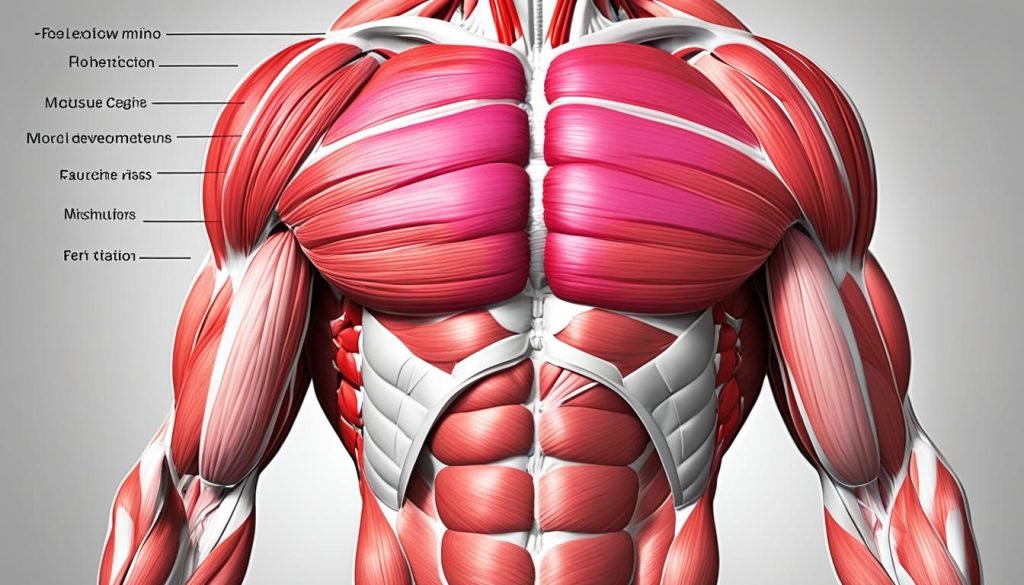
Learning about chest muscle anatomy is key for better upper body workouts. The chest has several important muscles, each with its own role. Knowing these muscles helps pick the right exercises to target them well.
Pectoralis Major and Minor
The pectoralis major is the biggest muscle in the chest, split into two parts: the clavicular and sternal heads. The clavicular head works on the upper chest, and the sternal head on the middle. This setup lets for many movements, like flexing and bringing the shoulder joint together. Underneath the pectoralis major is the pectoralis minor, which helps keep the scapula stable during exercises.
Serratus Anterior
The serratus anterior muscle is also key to chest function. It's on the side of the chest and keeps the shoulder blades stable during movements. This muscle is crucial for pushing actions, making it important for push-ups and bench presses.
Muscle Fiber Orientation and Exercise Selection
How muscle fibers are arranged affects how exercises work on the chest. Different fibers in the pectoralis major and minor go in different directions. To make a good workout plan, understanding these orientations is key. By picking exercises that hit specific muscle angles, you can get the most growth and definition. For example, incline presses work on the upper fibers, while flat presses hit the middle.
Choosing the right exercise selection based on these muscle features leads to big gains in strength and size.
| Muscle | Location | Function |
|---|---|---|
| Pectoralis Major | Upper and middle chest | Flexion, adduction of the shoulder |
| Pectoralis Minor | Underneath pectoralis major | Stabilizes the scapula |
| Serratus Anterior | Lateral chest region | Shoulder blade stability during movement |
What Exercises Work the Chest
Understanding both compound exercises and isolation movements is key to a great chest workout. The right mix can boost strength and muscle definition in the chest. Here are some exercises you should include in your routine.
Top Compound Exercises
Compound exercises are important for building strength. They work many muscles at once. Here are the top chest exercises for strength:
- Barbell Bench Press: This classic move targets the pectorals, deltoids, and triceps.
- Incline Bench Press: Focuses more on the upper part of the chest, contributing to a balanced appearance.
- Weighted Dips: Engages the chest alongside shoulders and triceps for a deeper workout.
Isolation Movements for Definition
Isolation movements focus on the chest muscles for better definition. Adding these to your routine can shape the pectorals well:
- Chest Flys: This exercise stretches and contracts the pectorals, promoting muscle growth.
- Cable Crossovers: Provides constant tension on the chest muscles, aiding in definition and sculpting.
Using both compound and isolation exercises in your chest workouts helps with full muscle development. It targets different chest areas for the best results.
| Exercise Type | Examples | Main Muscle Groups |
|---|---|---|
| Compound Exercises | Barbell Bench Press, Incline Bench Press, Weighted Dips | Pectorals, Deltoids, Triceps |
| Isolation Movements | Chest Flys, Cable Crossovers | Pectorals |
Effective Chest Workouts for Different Fitness Levels
Creating chest workouts for all fitness levels is key to steady progress and avoiding injuries. By choosing the right exercises, people can make their workouts better and reach their goals.
Beginner-Friendly Chest Training
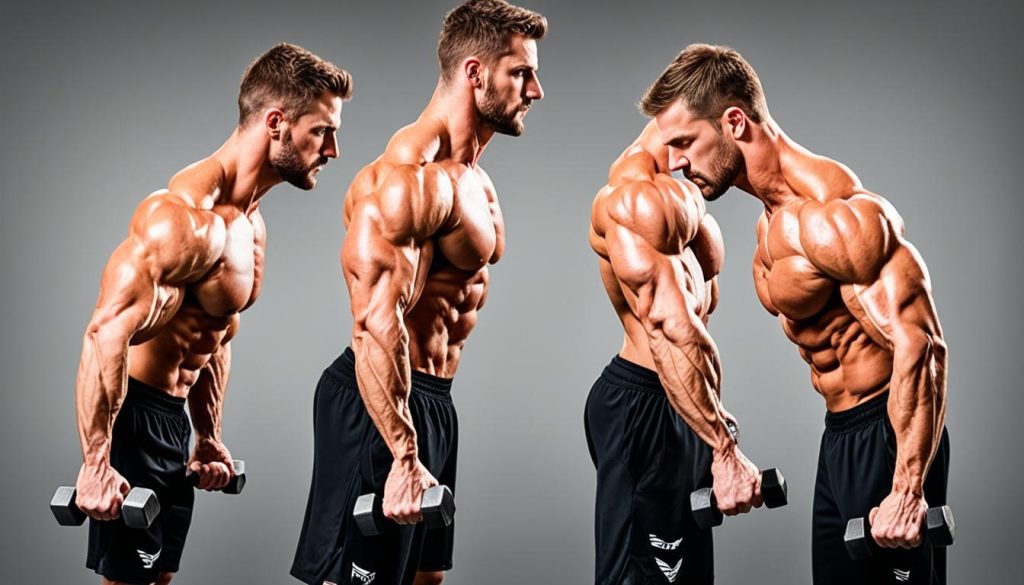
For beginners, starting with basic moves is important. Simple exercises like:
- Push-ups
- Incline push-ups
- Dumbbell chest presses
These exercises help build good form and strength. Beginners should start with light weights to get used to the movements safely. This builds confidence in lifting.
Intermediate and Advanced Chest Programs
As fitness improves, workouts get more challenging. Exercises such as:
- Flat bench press
- Chest dips
- Cable crossovers
These exercises increase intensity and variety, pushing the muscles harder. For advanced lifters, complex techniques like supersets and drop sets are used. These help grow muscles by training more.
Activities like:
- Decline bench presses
- Weighted dips
- Medicine ball throws
| Fitness Level | Suggested Exercises | Focus Areas |
|---|---|---|
| Beginner | Push-ups, Incline Push-ups, Dumbbell Chest Press | Form, Strength Building |
| Intermediate | Flat Bench Press, Chest Dips, Cable Crossovers | Volume, Intensity |
| Advanced | Decline Bench Presses, Weighted Dips, Medicine Ball Throws | Hypertrophy, Strength Gains |
This step-by-step approach helps everyone improve and succeed in chest training over time.
Tips for Maximizing Chest Muscle Development
To grow your chest muscles, you need to use a mix of good training, the right nutrients, and enough rest. Each part is key to building a strong chest and growing your muscles overall.
Proper Nutrition for Muscle Growth
Eating right is crucial for muscle growth in chest training. You should eat a lot of protein, about 1.6 to 2.2 grams per kilogram of body weight if you're into strength training. Include lean meats, dairy, plants, and other protein-rich foods in your diet.
Don't forget about carbs and healthy fats. They help with energy and getting better after workouts. Eating a variety of foods helps you perform well in workouts and stay healthy.
The Role of Progressive Overload
Using progressive overload is key to making your muscles grow and get stronger. Slowly increase the weights or intensity of your chest workouts. This can mean changing how many reps you do, how many sets you have, or how long you rest.
Keep an eye on your progress. Make sure each workout is building on the last one. This way, you'll keep pushing yourself and growing your chest muscles.
Rest and Recovery Recommendations
Rest and recovery are just as important as training for muscle repair and growth. Make sure to give your chest muscles enough time to recover between workouts. Aim for 24 to 48 hours of rest after a tough chest workout.
Good sleep is also key for muscle recovery and hormone balance. Try adding some light stretching or foam rolling to help with blood flow and flexibility.
Conclusion
Effective chest training is key for boosting strength and fitness. It helps with muscle growth and looks good too. A good workout plan should mix compound and isolation exercises based on your fitness level.
Chest workouts do more than make you look good. They help with posture and make everyday tasks easier. This knowledge lets you pick exercises that work best for you.
A good chest training plan also needs proper nutrition, steady weight increases, and enough rest. These things help muscles grow and keep you fit for the long run. Working on your chest muscles improves strength and overall performance.
FAQ
What are some of the best chest exercises for muscle development?
Top chest exercises include the barbell bench press, incline bench press, and weighted dips. Chest flys and cable crossovers are also great. These exercises work different parts of the chest muscles well.
How often should I perform chest workouts for optimal results?
Aim to do chest workouts 1-2 times a week for best results. Make sure to give your muscles time to recover between sessions. This helps with muscle growth and prevents injuries.
Are there beginner-friendly chest exercises?
Yes, beginners can start with push-ups, incline push-ups, and modified dips. These exercises build basic strength and ensure proper form. They're a good step before moving to harder exercises.
What role does nutrition play in chest muscle development?
Nutrition is key for growing chest muscles. Eating enough protein, about 1.6-2.2 grams per kilogram of body weight, helps muscle growth. Also, balance your diet with carbs and fats to fuel your workouts.
How can I incorporate progressive overload in my chest training?
Increase weights, add reps or sets, or change workout intensity and volume over time. This approach helps improve muscle strength and size continuously.
Why is understanding chest muscle anatomy important?
Knowing chest muscle anatomy helps pick effective exercises for all pectoral muscle regions. It ensures balanced muscle growth and better chest looks.
What are effective isolation movements for chest sculpting?
Chest flys and cable crossovers are great for sculpting the chest. They focus on the pectoral muscles for better muscle definition and a defined chest.
How does chest training improve athletic performance?
Chest training boosts upper body strength, which is key for pushing movements. A stronger chest helps in sports and activities like throwing, pushing, and lifting.
Source Links
- The Top 8 Chest Exercises for Strength and Shape – https://www.healthline.com/health/fitness-exercise/best-chest-exercises
- Chest Workouts – Best Exercises for Muscle and Strength – https://athleanx.com/articles/chest-workouts?srsltid=AfmBOopCfLHqo9tbvLnCuZGlyKOdux1527IPzSHc1X_dZlhaiYUJ7FHu
- 10 Effective Chest Exercises for Strength – https://eosfitness.com/blog/10-effective-chest-exercises-for-strength/
Recent Posts
It's important to evaluate whether Beachbody On Demand continues to meet your fitness needs as we enter 2025. With a range of workout programs and nutrition plans, the platform claims to cater to...
Just like having a personal trainer at your fingertips, Beachbody On Demand offers you an extensive library of on-demand workout programs accessible anytime, anywhere. This service allows you to...