

Many people experience fluctuations in their exercise motivation throughout the year due to seasonal changes. As the days grow shorter and temperatures drop in winter, your enthusiasm for outdoor activities may wane, leading to decreased physical activity. Conversely, warm weather and longer daylight in summer can boost your energy and inspire you to stay active. Understanding these patterns can help you adapt your routine and maintain a consistent workout schedule. Explore more about How Seasonal Changes Affect Physical Activity – Energym to find strategies that work best for you.
Understanding Seasonal Affective Disorder
To fully grasp the link between seasonal changes and exercise motivation, it's vital to understand Seasonal Affective Disorder (SAD). This condition typically affects individuals during specific seasons, particularly in winter, leading to feelings of depression due to reduced sunlight exposure. Research highlights the Impact of Seasonality on Physical Activity: A Systematic … exploration of how these emotional changes can diminish your desire to engage in physical activities.
Symptoms and Effects
Below are common symptoms of SAD, including fatigue, irritability, and changes in sleep patterns. These symptoms can intensely affect your daily routines and overall well-being, contributing to a lack of motivation for exercise. Recognizing these signs in yourself is the first step toward better management during seasonal transitions.
Seasonal Patterns in Exercise Motivation
Motivation often fluctuates with the changing seasons, influenced by factors such as daylight hours and weather conditions. You may find yourself more energized during summer months when longer days invite outdoor activities, whereas winter's dreariness might dim your enthusiasm for exercise. This shift can lead to decreased physical activity, posing risks to your mental and physical health.
Hence, it's imperative to acknowledge these seasonal patterns in your motivation levels. During sunnier months, you may feel a surge in enthusiasm to try new sports or exercises, while winter can trigger feelings of lethargy and reduced motivation. Understanding and tracking these emotional shifts can help you implement strategies to overcome them, ensuring that your commitment to fitness remains strong regardless of the season.

Psychological Factors Influencing Motivation
Even as the seasons shift, your motivation can be significantly impacted by various psychological factors. Understanding these elements can help you harness your drive more effectively. Key influences include:
- Seasonal Affective Disorder (SAD)
- Changes in energy levels
- Social support and influences
- Self-efficacy and self-perception
Knowing how these factors manifest in your daily life can guide your exercise routine during different seasonal phases.
Mood Fluctuations
For many, seasonal changes can lead to fluctuating moods, which directly affect your exercise motivation. The lack of sunlight in winter may induce feelings of lethargy, while the sunlight of spring can uplift spirits. Recognizing how your mood correlates with the seasons is vital for developing a consistent workout habit.
Goal Setting Across Seasons
Influencing your motivation significantly, goal setting must evolve with the seasons. You might find that specific times of year create unique challenges or opportunities for your fitness objectives.
Hence, it's imperative to set realistic and flexible goals that align with the seasonal context. For instance, when outdoor activities dwindle in colder months, focus on indoor workouts or strength training. On the other hand, when spring arrives and outdoor options expand, aim for community runs or cycling excursions. Adapting your goals not only keeps your routine fresh but also encourages consistent motivation, helping you overcome potential seasonal dips.
Environmental Influences on Exercise Habits
While your environment plays a significant role in shaping your exercise habits, understanding how these factors interact can help you maintain your motivation throughout the seasons. From the weather to the accessibility of outdoor spaces, these elements either enhance or hinder your ability to stay active and committed to your fitness goals.
Weather Conditions
To keep you motivated, it's crucial to recognize that different weather conditions can either inspire you to engage in outdoor workouts or deter you from exercising altogether. For example, sunny and mild days often encourage outdoor activities, while extreme temperatures or rain may lead you to opt for indoor workouts instead.
Access to Outdoor Activities
The availability of outdoor spaces significantly affects your motivation to exercise. When you have easy access to parks, trails, or recreational areas, you're more likely to engage in physical activities like running, cycling, or hiking. The beauty of nature can also boost your mood and energy levels, making exercise more enjoyable and rewarding.
Consequently, having access to safe and appealing outdoor activities can transform your fitness routine. You might find that exercising in enjoyable natural surroundings enhances your overall experience, leading to better mental health and fitness outcomes. When outdoor spaces are well-maintained, conveniently located, and equipped with features like walking paths, benches, and lighting, you are likely to feel more motivated to engage in regular exercise. Moreover, participating in community activities or outdoor classes can help you build relationships with others who share your fitness goals, further enhancing your commitment to staying active.
Strategies to Maintain Motivation Year-Round
Once again, it's important to recognize that maintaining your exercise motivation across seasons requires a proactive approach. Implementing strategies such as setting shorter-term goals, varying your workout routine, and finding a workout buddy can help you stay engaged and committed. Embrace the change of seasons by trying new activities that align with seasonal conditions, ensuring that your fitness journey remains enjoyable and invigorating year-round. Ultimately, developing a mindset that welcomes and adapts to seasonal transitions can significantly enhance your motivation to stay active.
Indoor Exercise Alternatives
About when the weather turns unfavorable, you can still stay fit indoors with various exercise alternatives. Activities such as yoga, dance classes, or home workout videos can provide effective workouts without the need for outdoor conditions. Investing in equipment like resistance bands or dumbbells can also create a diverse range of exercises that you can easily incorporate into your routine, keeping you motivated regardless of the season.
Seasonal Goal Adjustments
To ensure you remain enthusiastic about your fitness journey, adjusting your goals with the changing seasons is necessary. By evaluating what is achievable based on seasonal climate and your personal schedule, you can set realistic and motivating targets that drive your commitment.
Alternatives are available to support your seasonal goal adjustments, such as shifting your focus from running outdoors to completing an indoor strength training program during harsh weather. Taking into account environmental constraints and your evolving fitness levels, you can set realistic benchmarks that will sustain your drive. Whether it's increasing your flexibility in the spring or building strength in the winter, adapting your goals ensures that you remain engaged and can celebrate your progress throughout the year.
The Role of Social Support in Seasonal Motivation
Despite the fluctuations in your motivation levels due to changing seasons, the presence of social support can play a significant role in keeping you on track with your fitness goals. Engaging with friends, family, or workout partners can help foster a sense of accountability and encouragement, making it easier for you to push through seasonal challenges. Whether it's joining a group class or simply planning a regular exercise schedule with a friend, social connections can elevate your commitment to staying active throughout the year.
Group Activities and Accountability
After you establish a routine of engaging in group activities, you'll likely find that the collective energy and camaraderie of exercising with others can greatly enhance your motivation. When you participate in group workouts or community sports, the sense of accountability increases, encouraging you to show up even on days when your motivation wanes. This support network can help you remain committed to your fitness journey, regardless of seasonal changes.
Community Engagement in Different Seasons
Community engagement in various seasons can provide the social support you need to stay motivated during your fitness pursuits. With opportunities to join local fitness groups, participate in charity runs, or engage in outdoor classes, you can experience a sense of belonging while adapting to seasonal conditions. Many communities host season-specific events that cater to different activities, whether it's a summer yoga in the park or winter running clubs. These events not only foster a supportive environment for your fitness journey but also help you form lasting connections with others who share your enthusiasm for an active lifestyle.
With the changing seasons, your community may offer unique opportunities for participation and engagement that can significantly enhance your motivation. By leveraging local events, challenges, and outdoor activities, you can immerse yourself in a culture that values fitness and well-being throughout the year. Connecting with fellow fitness enthusiasts not only makes exercising more enjoyable but also allows you to harness the power of shared experiences to keep you motivated, no matter the season.
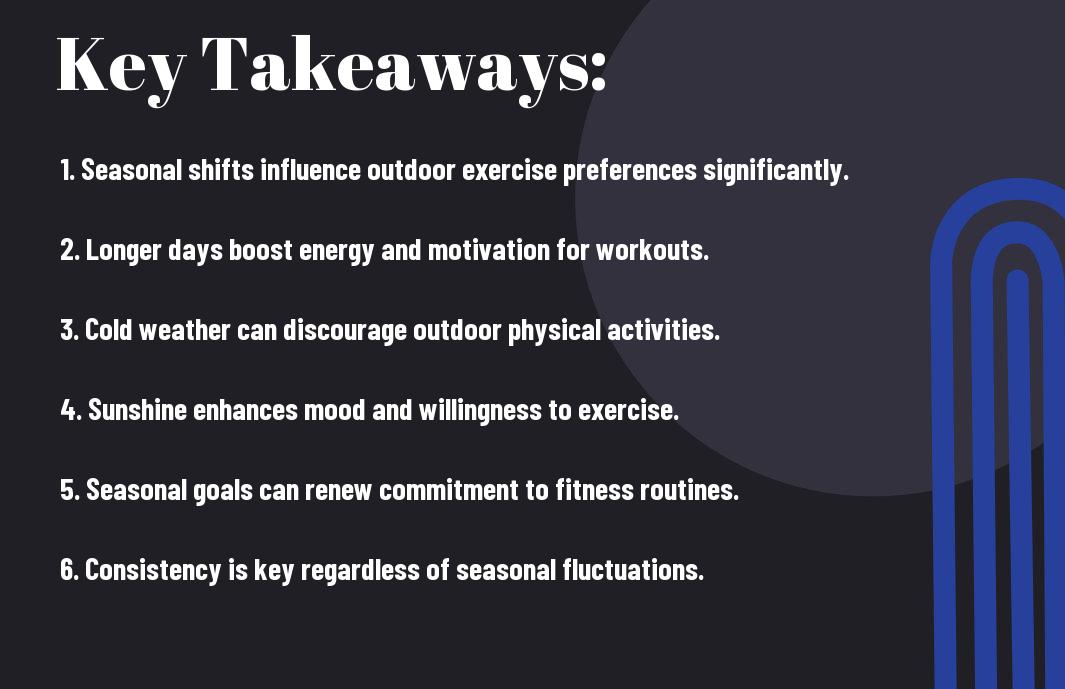
Summing up
Conclusively, understanding the impact of seasonal changes on your exercise motivation can significantly enhance your fitness journey. As seasons shift, your surroundings influence your mood, engagement level, and workout preferences. By recognizing these patterns, you can adapt your routines accordingly, whether it's embracing outdoor activities in warmer months or finding enjoyable indoor options during colder ones. Ultimately, being mindful of these changes allows you to maintain enthusiasm for your fitness goals and fosters a sustainable, year-round exercise habit.
Q: How do seasonal changes affect exercise motivation throughout the year?
A: Seasonal changes can have a significant impact on exercise motivation due to various environmental and psychological factors. In warmer months, longer days and pleasant weather often encourage outdoor activities, leading to higher levels of motivation. Conversely, colder months may bring challenges like decreased daylight, lower temperatures, and harsher weather conditions, which can discourage individuals from exercising outside. Additionally, the changing seasons can affect mood and energy levels for some people, with the winter months sometimes leading to seasonal affective disorder (SAD), further impacting motivation to stay active.
Q: What strategies can individuals use to maintain exercise motivation during less favorable seasons?
A: To maintain exercise motivation during less favorable seasons, individuals can adopt several strategies. One effective method is to diversify workout routines by mixing indoor and outdoor activities or exploring new fitness classes that can be done indoors during colder months. Setting achievable goals and tracking progress can also enhance motivation, as it provides a sense of accomplishment. Additionally, finding a workout buddy or joining a fitness community can help maintain accountability and create a supportive environment that encourages regular activity, regardless of the season.
Q: Are there specific seasonal activities that can boost exercise motivation?
A: Yes, engaging in season-specific activities can boost exercise motivation. In the spring and summer, outdoor activities such as hiking, swimming, cycling, and team sports are popular, offering an enjoyable way to stay active. In the fall, activities like apple picking or running in local marathons can be appealing. For the winter months, indoor options such as yoga, gym workouts, or even winter sports like skiing or snowboarding can help make exercise feel more enticing. By aligning workouts with seasonal opportunities, individuals may find increased motivation and enjoyment in their fitness routines.
Recent Posts
It's important to evaluate whether Beachbody On Demand continues to meet your fitness needs as we enter 2025. With a range of workout programs and nutrition plans, the platform claims to cater to...
Just like having a personal trainer at your fingertips, Beachbody On Demand offers you an extensive library of on-demand workout programs accessible anytime, anywhere. This service allows you to...