
Ever wondered if you're getting enough protein for your health and fitness goals? With so many nutrition plans out there, it can be hard to find the right balance. But, there's good news. A protein goal calculator can make this process much easier.
This free tool helps you figure out how much protein you need every day. It takes into account your age, gender, weight, and how active you are. Whether you want to manage your weight, build lean muscle, or improve your health, this is where effective nutrition planning starts.
Key Takeaways
- A protein goal calculator helps personalize your protein intake.
- This free tool is beneficial for various populations, including athletes and vegetarians.
- Understanding your protein needs can enhance nutrition planning.
- Factors like age and activity level influence daily protein requirements.
- Using a calculator can simplify dietary adjustments.
Understanding Protein: The Essentials
Protein is a key nutrient for our health. It's one of the three main nutrients our bodies need. Proteins are made of long chains of amino acids. These chains are vital for many body functions.
What is Protein and Why is it Important?
Protein is essential for our bodies. It helps build and repair tissues, makes enzymes and hormones, and supports our immune system. Proteins are made of essential amino acids and non-essential ones. Essential amino acids are important because our bodies can't make them on their own.
Roles of Proteins in the Body
Proteins have many important jobs, including:
- Muscle repair and growth: Proteins help muscles recover after exercise.
- Hormone regulation: Some proteins act as hormones, controlling body processes.
- Immune support: Proteins help make antibodies to fight infections.
- Transport mechanisms: Proteins move molecules around the body.
Common Sources of Protein
There are two main types of protein sources: complete and incomplete proteins:
| Type | Examples | Amino Acid Profile |
|---|---|---|
| Complete Protein | Meat, dairy, eggs | Contains all essential amino acids |
| Incomplete Protein | Beans, grains, nuts | Missing one or more essential amino acids |
Eating different protein sources helps make sure we get all the essential amino acids. This supports a balanced diet.
How Much Protein Do You Need?
Knowing how much protein you need is key for good health. The Recommended Daily Allowance (RDA) gives a basic idea of what's needed for adults. But, your protein needs can change a lot because of your age, gender, how active you are, and your health.
Recommended Daily Allowance (RDA)
The RDA for protein is about 0.8 grams per kilogram of body weight for most adults. So, a 70 kg person would need around 56 grams of protein daily. But remember, this amount can change based on your lifestyle and diet goals.
Factors Affecting Protein Requirements
Many things can change how much protein you need:
- Age: Older people might need more protein to keep their muscles strong.
- Gender: Men usually need more protein because they have more muscle.
- Physical Activity Level: If you're an athlete or work out a lot, you might need 1.2 to 2.0 grams of protein per kilogram of body weight for muscle recovery and growth.
- Health Status: Some health issues might mean you need to eat more or less protein.
It's important to tailor your diet to your protein needs. Talking to a healthcare expert can help you get advice that fits your health goals and lifestyle.
Using the Protein Goal Calculator
Getting enough protein is key to reaching your fitness goals. A protein calculator makes it easy, adjusting your diet to fit your body and activity level.
How the Calculator Works
The protein calculator asks for your weight, height, age, and how active you are. With this info, it figures out how much protein you need. Choose your goal, like maintaining weight, losing weight, or building muscle, and get tailored advice.
What Information Do You Need?
To get the most from the protein calculator, you'll need:
- Weight: Your current weight is crucial.
- Height: It affects your body type.
- Age: Your metabolism changes with age.
- Activity Level: Pick your exercise level, from sedentary to very active.
- Fitness Goals: Tell it if you want to keep your weight, lose weight, or build muscle.
Benefits of Using the Calculator
Using a protein calculator has many perks for those looking for personalized nutrition:
- It gives exact amounts of protein you need for your fitness goals.
- Makes meal planning easier with clear protein guidelines.
- Helps you make better food choices by increasing dietary awareness.
- Helps track your intake of macronutrients, keeping you accountable.
At the end, a protein calculator can make your nutrition efforts easier. It ensures your diet supports your fitness dreams.
Tips for Reaching Your Protein Goals
Getting enough protein is key for good health and building muscles. Eating a mix of high-protein foods, tracking your nutrients, and adjusting your diet can really help. This approach can make a big difference in your results.
High-Protein Food Options
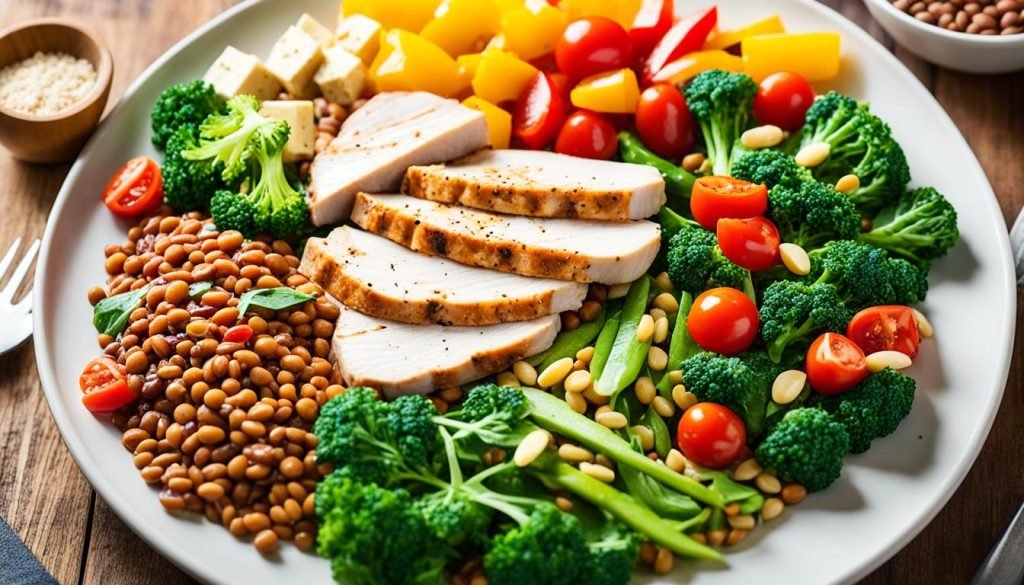
Choosing the right high-protein foods is important. Here are some great options:
- Lean meats such as chicken breast and turkey
- Fish varieties like salmon and tuna
- Legumes including lentils and chickpeas
- Dairy products like Greek yogurt and cottage cheese
- Plant-based sources such as quinoa and edamame
- Nuts and seeds including almonds and chia seeds
Incorporating Macronutrient Tracking
Tracking your macronutrients helps you keep an eye on your protein and nutrition. Apps like MyFitnessPal and Cronometer can show you what you're eating daily. Keeping a food diary helps you hit your protein targets and avoid too many calories.
Adjusting Dietary Plans Based on Goals
Adjusting your diet is key to reaching your goals, whether it's gaining muscle, losing fat, or staying at a healthy weight. Here are some tips:
- Plan meals with high-protein snacks like beef jerky or hard-boiled eggs.
- Use protein supplements like whey or plant-based powders when needed.
- Spread out your protein intake across all meals for best muscle growth.
| High-Protein Food | Protein Content (per 100g) | Calories |
|---|---|---|
| Chicken Breast | 31g | 165 |
| Salmon | 25g | 206 |
| Lentils | 9g | 116 |
| Greek Yogurt | 10g | 59 |
| Quinoa | 4g | 120 |
By adding these high-protein foods to your diet, tracking your nutrients well, and adjusting as needed, reaching your protein goals can be easy.
Conclusion
Protein intake is key for reaching fitness goals like muscle gain, weight control, or better health. Adding enough protein to your meals helps with muscle recovery and growth. It also keeps your nutrition balanced.
Using a protein goal calculator lets you tailor your diet to your fitness goals and lifestyle. This way, you can make sure your protein intake matches your fitness needs. Making informed diet choices helps you keep making progress.
Everyone's nutritional needs are different. So, think about what you need and talk to health experts if you should. Adding enough protein to your life helps with your fitness goals and keeps you healthy overall.
FAQ
What is a protein goal calculator?
A protein goal calculator is a free online tool. It helps users figure out how much protein they need daily. This depends on things like age, gender, weight, and how active you are. It helps people reach their fitness goals, like managing weight or gaining lean muscle.
Why is protein important for my health?
Protein is key for our health, along with carbs and fats. It helps repair muscles, grow tissues, regulate hormones, and keep our immune system strong. If we don't get enough protein, our health and fitness might not be as good as they should be.
How do I determine my daily protein needs?
The daily protein need is usually set at 0.8 grams per kilogram of body weight for healthy adults. But, it can change based on your age, gender, how active you are, and your fitness goals. A protein goal calculator can give you a better idea of what you need.
What information do I need to use a protein goal calculator?
You'll need to give the protein goal calculator some details. These include your weight, height, age, how active you are, and your fitness goals. This helps the calculator give you specific advice on how much protein you should eat.
What are some high-protein food options I can include in my diet?
There are many high-protein foods out there. You can eat lean meats like chicken and turkey, fish, eggs, dairy, beans, lentils, tofu, and quinoa. Eating a variety of these foods can help you meet your protein needs.
How can I effectively track my macronutrient intake?
You can track your macronutrients with nutritional apps, food diaries, or meal-planning software. Logging your daily food helps you make sure you're getting enough protein and staying on track with your fitness goals.
Should I consult a professional for personalized nutrition advice?
Yes, talking to a healthcare professional or registered dietitian is a good idea. They can give you advice that fits your specific needs or health conditions. This makes sure your diet is safe, effective, and meets your fitness goals.
Can I use protein supplements to help reach my protein goals?
Yes, protein supplements can help increase your protein intake if it's hard to get enough from food. But, they should be used to supplement your diet, not replace it.
Source Links
- Protein Calculator – https://www.calculator.net/protein-calculator.html
- Protein Calculator – How Much Protein Do I Need? | Promix Nutrition® – https://promixnutrition.com/pages/protein-calculator?srsltid=AfmBOorm3HeGJ7jkEA2HE6ESbfYF2yyq05En1A99hcQbnco3aSt4uh8n
- Protein Calculator: How Much Protein Do I Need? – https://www.bodybuilding.com/fun/calpro.htm
Recent Posts
It's important to evaluate whether Beachbody On Demand continues to meet your fitness needs as we enter 2025. With a range of workout programs and nutrition plans, the platform claims to cater to...
Just like having a personal trainer at your fingertips, Beachbody On Demand offers you an extensive library of on-demand workout programs accessible anytime, anywhere. This service allows you to...