
This guide will help you understand the significant impact that hydration has on your weight management journey. You may not realize that adequate water intake can help suppress your appetite, boost your metabolism, and even enhance your exercise performance. Neglecting your hydration needs can lead to negative health effects such as fatigue and confusion, potentially hindering your weight loss efforts. By prioritizing your hydration, you can take a vital step toward achieving your health goals effectively. Let's explore how water plays a transformative role in maintaining a healthy weight.
Understanding Hydration
Your body relies heavily on water to function effectively. Hydration involves maintaining the right balance of fluids in your system, which is important for overall health. Proper hydration aids in digestion, nutrient absorption, and regulating body temperature. Additionally, it can influence your energy levels and even your mood. Ensuring adequate hydration is not just about drinking water; it also involves understanding how it impacts your wellness and weight management.
Types of Hydration
Types of hydration can be categorized into different sources and methods. Each type plays a unique role in replenishing your body's fluid needs:
| Type | Description |
|---|---|
| Plain Water | The most natural and effective form of hydration. |
| Electrolyte Drinks | Help replenish lost minerals during intense exercise. |
| Foods | Fruits and vegetables contain substantial water content. |
| Herbal Teas | Provide hydration with added health benefits. |
| Infused Water | Add flavor without extra calories. |
Perceiving the different types of hydration allows you to choose the most beneficial options for your lifestyle and health goals.
Factors Affecting Hydration Needs
Hydration varies by individual based on several factors. Consider the following aspects that influence your personal hydration requirements:
- Activity Level – More active individuals require more fluids.
- Climate – Hot weather increases fluid loss through sweat.
- Health Status – Illness can necessitate increased water intake.
- Diet – High sodium or sugar can lead to dehydration.
- Age – Evolving needs based on life stage and metabolic changes.
Hydration needs are not one-size-fits-all and understanding your unique situation can significantly improve your overall health. Being aware of how these factors influence you can empower you to make better hydration choices. Knowing your body's requirements encourages informed decisions, ensuring you stay well-hydrated.
The impact of activity level, climate, and diet cannot be overstated when it comes to your hydration needs. High exertion levels and exposure to hot environments can lead to faster fluid loss, while a diet high in sodium or processed foods can dramatically affect your hydration status as well. Pay close attention to these factors as you strive to reach your health goals. Knowing how these elements play into your hydration needs enables you to maintain optimum levels for weight management and overall wellbeing.
Hydration and Weight Management
Some studies suggest that staying properly hydrated can significantly support your weight management efforts. For instance, drinking water before meals can reduce your overall calorie intake and enhance your metabolic rate. To learn more, check out this article on Why Drinking Water Is Important For Weight Loss.
How Hydration Influences Metabolism
Metabolism plays a key role in how your body processes food and converts it into energy. Adequate hydration positively influences your metabolism by enhancing nutrient absorption and promoting efficient fat-burning processes. This can support your weight management efforts, making it easier for you to achieve your fitness goals.
The Role of Hydration in Appetite Control
Control over your appetite is vital for effective weight management. Staying well-hydrated can help fend off unwanted hunger pangs. Often, you might mistake thirst for hunger, leading to unnecessary snacking. The more water you drink, the more likely you are to feel full and resist the temptation to overeat. Additionally, proper hydration can improve your body's ability to metabolize fat, making it easier for you to maintain a healthy weight. Prioritizing hydration can be a simple yet effective strategy in your weight management journey.
Tips for Staying Hydrated
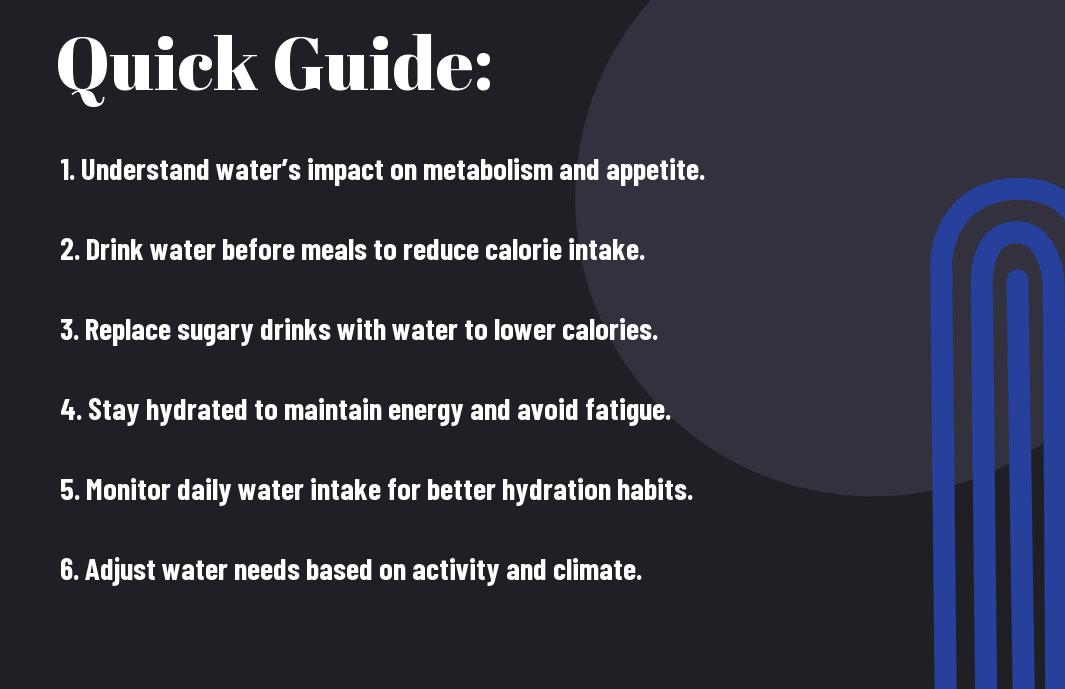
The key to effective hydration lies in developing sustainable habits. Here are some tips to help you stay on track:
- Carry a water bottle with you.
- Set reminders to drink throughout the day.
- Infuse your water with fruits or herbs for flavor.
- Drink a glass of water before meals.
- Choose water instead of sugary beverages.
Perceiving hydration as part of your daily routine will support your weight management goals. For more strategies, check out 11 Easy Ways to Get More Water.
Daily Water Intake Recommendations
Water plays a vital role in overall health and weight management, and knowing your daily intake recommendations is vital. Aim for about 3.7 liters (or 13 cups) for men, and 2.7 liters (or 9 cups) for women, including all beverages and food sources. Adjust these amounts based on your activity level and climate.
Smart Hydration Strategies
Strategies for maintaining hydration can significantly influence your health objectives. Some effective approaches include tracking your water intake with smartphone apps, drinking a glass of water before each meal, and consuming foods with high water content, such as fruits and vegetables. The goal is to keep water accessible and consume it regularly throughout the day.
It's vital to be proactive about your hydration habits. Insufficient intake can lead to feelings of fatigue, headaches, and impaired physical performance. Conversely, staying well-hydrated can boost your metabolism and help curb unnecessary snacking. Monitoring your hydration can positively affect your overall weight management journey, making sure you prioritize water intake as part of your daily routine helps you achieve your wellness goals.
Step-by-Step Guide to Improved Hydration
To enhance your hydration levels effectively, start by integrating water-rich foods into your diet, such as fruits and vegetables. Establish a routine that includes drinking water before meals and carrying a water bottle throughout the day. For more on The Role of Hydration in Weight Loss and Metabolic Health, consider monitoring your progress with a hydration app to help you stay on track. Below is a simple table to guide you in improving your hydration practices:
| Set Goals | Determine a daily water intake goal based on your activity level and weight. |
| Track Intake | Use an app or journal to monitor how much water you consume daily. |
| Hydration Reminders | Schedule reminders on your phone to help you drink water consistently. |
| Flavor It | Add fruit or herbs to your water to make it more enjoyable. |
Creating a Hydration Plan
Hydration is about developing a personalized plan that fits your lifestyle. Start by calculating your daily water needs and incorporate hydration habits that work for you. Aim to drink a glass of water first thing in the morning, and set specific times throughout the day to refill your bottle. Personalize your hydration strategy by considering factors like climate, physical activity, and how much caffeine you consume.
Monitoring Your Hydration Levels
Your hydration levels are important for your overall well-being and can significantly impact your weight management efforts. Keeping an eye on your body's signals, such as thirst and urine color, can help gauge your hydration status. Aim for light yellow urine, which indicates proper hydration, while darker urine suggests the need for increased intake.
Plus, regular monitoring of your hydration levels can lead to better health outcomes and help maintain optimal energy levels. Getting enough fluids can improve your metabolic function, enhance exercise performance, and support healthy digestion. It's vital to address any signs of dehydration promptly, as it can lead to fatigue, headaches, and diminished mental clarity. Prioritizing hydration will not only assist in weight management but also contribute positively to your overall health.
Pros and Cons of Hydration Techniques
Unlike other weight management strategies, hydration techniques come with their own set of advantages and disadvantages. Understanding these can help you make informed choices about your hydration approach.
| Pros | Cons |
|---|---|
| Promotes satiety and helps control appetite | Overhydration can lead to water intoxication |
| Supports metabolic functions and energy levels | Excessive intake may disrupt electrolyte balance |
| Improves digestion and nutrient absorption | Frequent bathroom trips can be inconvenient |
| Enhances physical performance and endurance | Can be hard to regulate in hot climates |
| Boosts skin health and appearance | Can be difficult to track intake accurately |
Benefits of Proper Hydration
The benefits of proper hydration extend beyond merely quenching your thirst. Staying hydrated helps regulate your body temperature, supports nutrient transport, and can significantly enhance your focus and cognitive function. Moreover, by drinking enough water, you can help maintain a healthy weight because it keeps your metabolism functioning optimally and reduces the likelihood of mistaking thirst for hunger.
Potential Drawbacks to Consider
Techniques for hydration can have potential drawbacks that you should keep in mind as well. While drinking plenty of water is imperative, overdoing it may lead to water intoxication, resulting in serious conditions like hyponatremia, where sodium levels become dangerously low. Additionally, if you don't balance your water intake with electrolyte-rich foods, you might experience muscle cramps or fatigue. It's also easy to become overly reliant on hydration as a solution for hunger, which can misguide your appetite.
Proper hydration is vital, but it's important to know your limits. If you consume an excessive amount of water, your body may struggle amid electrolyte imbalances, causing adverse effects such as headaches, nausea, or even confusion. Your hydration habits should complement a well-rounded diet rather than replace it. Focus on listening to your body; stay hydrated in moderation, balance your water intake with electrolytes, and pay attention to signs of thirst versus hunger.
To wrap up
To wrap up, understanding the role of hydration in weight management is imperative for achieving your health goals. By prioritizing water consumption, you enhance your metabolism, curb unnecessary cravings, and support effective digestion. Aim to incorporate adequate hydration habits into your daily routine, as this simple practice can significantly influence your overall well-being. So, as you commence on your weight management journey, consider how staying hydrated can be a powerful tool in optimizing your results.
FAQ
Q: How does hydration influence weight loss?
A: Adequate hydration plays a significant role in weight loss by helping to regulate appetite and improve metabolic processes. When you drink enough water, it can lead to a feeling of fullness, which may result in reduced calorie intake. Additionally, staying hydrated can enhance the body's ability to burn calories during physical activities and aid in the breakdown of fat. Drinking water before meals is often recommended as it can help prevent overeating.
Q: Is it possible to drink too much water while trying to manage weight?
A: Although hydration is important for weight management, overhydration can lead to a condition called hyponatremia, where the balance of electrolytes in the body is disrupted. This can happen if you consume excessive amounts of water in a short period. It's vital to listen to your body's signals and maintain a moderate intake. Ideally, individuals should tailor their water consumption based on their activity levels, climate, and dietary habits to ensure a balanced approach.
Q: Can other beverages besides water contribute to hydration and weight management?
A: While water is the most effective source of hydration, other beverages like herbal teas, infused water, and certain low-calorie drinks can also contribute. However, it is important to be cautious with beverages that contain added sugars or high calories, as these can counteract weight management efforts. Opting for no-calorie or low-calorie options that provide hydration without excessive calories can be beneficial while managing weight.
Recent Posts
It's important to evaluate whether Beachbody On Demand continues to meet your fitness needs as we enter 2025. With a range of workout programs and nutrition plans, the platform claims to cater to...
Just like having a personal trainer at your fingertips, Beachbody On Demand offers you an extensive library of on-demand workout programs accessible anytime, anywhere. This service allows you to...