

Many people struggle with maintaining their fitness goals, often falling short despite their initial enthusiasm. Understanding the psychology of habit formation can be the key to overcoming these obstacles. By grasping how habits are built and reinforced, you can effectively transform your behaviors, leading to more consistent workouts and healthier choices. This post will examine into the positive strategies you can employ to establish lasting habits while also addressing the potential pitfalls that can derail your progress. Let's explore how you can set yourself up for success.

Understanding Habits
To successfully achieve your fitness goals, it's crucial to understand how habits are formed. Habits are the automatic behaviors you develop through consistent actions and experiences. By grasping the underlying mechanisms of habit formation, you can better navigate your personal fitness journey and create sustainable routines that align with your objectives.
The Science Behind Habit Formation
For effective habit formation, various psychological principles come into play, such as the formation of neural pathways in your brain. When you engage in a specific behavior repeatedly, your brain establishes these pathways, making the action easier and more automatic over time. By recognizing the stages of habit development—cue, routine, and reward—you can manipulate your environment to support positive change and adhere to your fitness goals.
The Role of Triggers and Cues
Triggers initiate your habits, serving as signal points for action. Every habit begins with a cue, whether it's a time of day, emotional state, or external environment. Understanding these cues helps you identify what influences your behavioral patterns and allows you to design your routine to favor positive actions while reducing the chances of negative habits.
In addition to recognizing triggers, consider employing strategies to enhance their effectiveness. For instance, you can create environmental cues by placing your workout clothes near your bed or scheduling exercise sessions on your calendar. By intentionally integrating these cues into your life, you equip yourself to transform cues into stepping stones for consistent progress, ultimately reinforcing your fitness habits.
The Psychological Barriers to Habit Formation
Assuming you have set fitness goals, you may encounter various psychological barriers that hinder habit formation. These barriers can include fear of failure, self-doubt, and negative associations with physical activity. They manifest as reasons to procrastinate or give up altogether, impacting your motivation and attitude toward your fitness journey. Identifying these barriers is the first step to overcoming them and building sustainable fitness habits.
The Impact of Mindset
After establishing your awareness of these barriers, the next step is recognizing the significant role mindset plays in achieving your fitness goals. Your beliefs about your abilities influence your commitment and perspective on challenges. A positive mindset can bolster your resilience, empowering you to view setbacks as opportunities for growth rather than failures, ultimately paving the way for lasting habits.
Overcoming Obstacles
Formation of fitness habits is often derailed by external and internal obstacles, including time constraints, lack of support, or negative self-talk. It is vital to identify these triggers and develop strategies to combat them. Simple techniques, like scheduling workouts as non-negotiable appointments or establishing a support network, can significantly enhance your commitment. Additionally, practice self-compassion and replace negative thoughts with motivating affirmations. Don't let setbacks dictate your progress; instead, view them as stepping stones towards your ultimate fitness goals.
Strategies for Building Effective Fitness Habits
One effective way to build fitness habits is to establish a routine that aligns with your lifestyle. For guidance on creating lasting changes, check out The Psychology of Health Habit Formation: What Makes …. Start small, choose enjoyable activities, and track your progress to reinforce positive behaviors, ultimately making fitness a seamless part of your daily life.
Goal Setting Techniques
Between setting SMART (Specific, Measurable, Achievable, Relevant, Time-bound) goals and breaking them down into smaller milestones, you can transform lofty fitness aspirations into actionable steps. This method not only clarifies your objectives but also provides a sense of progression, keeping your motivation high as you celebrate each small victory.
The Power of Consistency
Strategies that prioritize consistency will cultivate lasting fitness habits in your life. Establishing a regular workout schedule and finding activities you enjoy will help ensure that your fitness routine becomes a non-negotiable aspect of your day.
Habits are formed through repeated actions, so maintaining a steady routine is key to long-term success. When you prioritize consistency in your fitness regime, you are more likely to see progress, which can lead to increased motivation. Missing a session occasionally is natural, but striving for a stable pattern helps ingrain healthy behaviors. Ultimately, consistent practice fosters both physical improvements and psychological resilience, propelling you toward your fitness goals.
The Influence of Environment on Habits
Keep in mind that your surroundings play a profound role in shaping your habits. An environment designed to support your fitness goals can significantly enhance your likelihood of adhering to healthy routines. This includes accessible workout spaces, fresh food availability, and even motivational decor that inspires your journey. Consider how simple adjustments to your environment can remove barriers and create a more conducive atmosphere for your fitness habits.
Creating a Supportive Fitness Environment
Fitness thrives in environments that encourage activity and healthy choices. To create a supportive fitness environment, consider organizing your living space to prioritize wellness. Set up your home with visible workout equipment, healthy snacks within easy reach, and dedicated areas for exercise. A well-designed environment not only fosters consistency but also keeps you motivated on your fitness journey.
The Role of Social Support
Above all, your social circle can greatly influence your fitness habits. Having friends, family, or workout partners who share your goals can substantially increase your commitment and enjoyment. Engaging in physical activities together not only provides a sense of accountability but also makes exercising more enjoyable, enhancing the likelihood of sticking to your goals.
Another vital aspect to consider is that strong social support can provide you with motivation and encouragement when challenges arise. Surrounding yourself with like-minded individuals creates a positive feedback loop, fostering a sense of community and shared purpose. This connection can significantly reduce feelings of isolation or discouragement, often safeguarding against the temptation to abandon your fitness goals. Having a support system can transform your approach, making it easier to stay committed to your journey.
Maintaining Motivation
All fitness journeys experience ups and downs, and maintaining motivation is key to sticking to your goals. You can strengthen your commitment by consistently reminding yourself of your reasons for pursuing fitness. Often, individuals find inspiration by exploring resources like The Psychology of Habit Formation in Fitness – VSA Blog, which can offer practical strategies and insights for perseverance along your path.
Intrinsic vs. Extrinsic Motivation
Before you launch on your fitness journey, it's imperative to understand the difference between intrinsic and extrinsic motivation. Intrinsic motivation comes from within, fueled by personal satisfaction and enjoyment, while extrinsic motivation is driven by external rewards such as praise or tangible results. Striking a balance between these motivations can enhance your overall commitment and success.
Celebrating Small Wins
Celebrating small wins is an effective way to maintain motivation on your fitness journey. By acknowledging your progress, however minor, you reinforce positive behavior and keep your spirits high.
Wins can come in various forms, from consistently completing your workouts to choosing healthier meal options. Each time you celebrate these small victories, you build confidence and reinforce a positive mindset. Take the time to reward yourself, whether through a favorite activity or a treat that aligns with your fitness journey. This practice not only boosts your motivation but also makes the overall process enjoyable. By focusing on steady progress rather than perfection, you create a sustainable path towards your ultimate fitness goals.
Tracking Progress and Adjusting Goals
Many individuals overlook the significance of tracking their progress when pursuing fitness goals. By regularly monitoring your achievements, you are not only able to celebrate small victories but also identify patterns that inform necessary adjustments to your routine. This process promotes accountability and keeps you motivated, ensuring you remain on track toward your long-term aspirations.
The Importance of Self-Monitoring
After setting fitness goals, self-monitoring becomes an vital tool in your journey. By recording your workouts, dietary habits, and overall progress, you gain valuable insights into what works best for you. This awareness allows you to make informed decisions, enhancing your commitment to habits that align with your objectives.
Adapting Goals as Needed
To ensure sustainable progress, adapting your goals is key to overcoming challenges. As you advance, your initial targets may no longer reflect your true potential or current circumstances. Flexibility in your goal-setting enables you to set realistic expectations that align with your evolving fitness level, lifestyle changes, or time constraints.
Needed adjustments can fortify your dedication and reinforce positive behaviors. When you encounter hurdles—be it an injury or a shift in priorities—don't hesitate to reevaluate your targets. Establish new, achievable milestones instead of succumbing to frustration. This strategy not only acknowledges your current abilities but also fosters a sense of accomplishment as you progress through your fitness journey.
Summing up
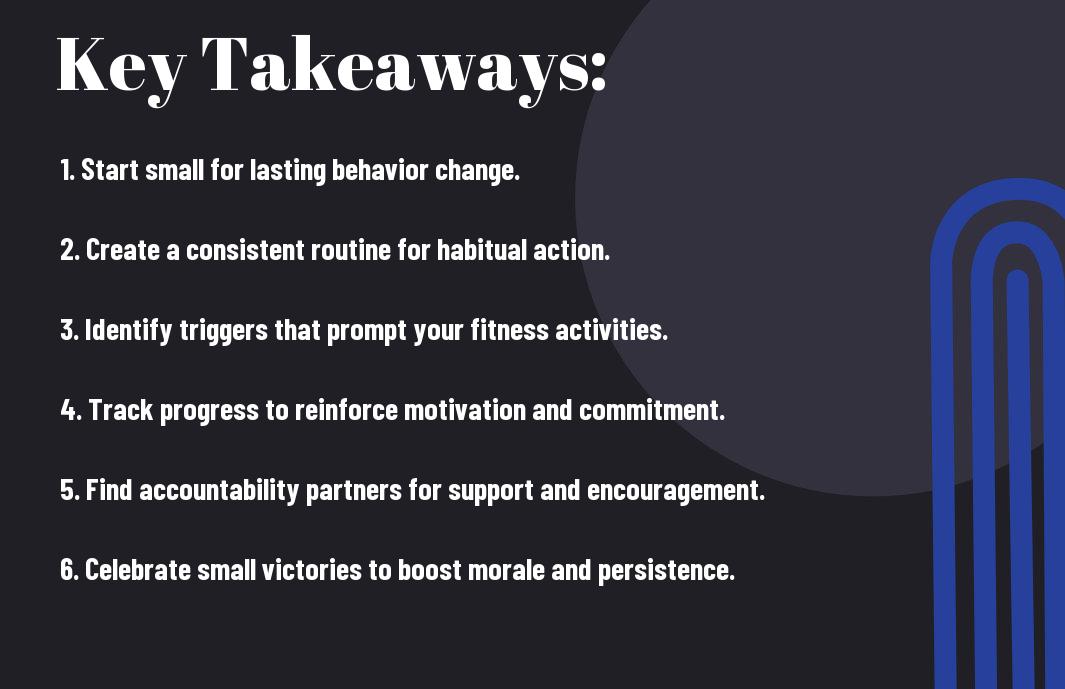
Ultimately, understanding the psychology of habit formation is key to sticking to your fitness goals. By focusing on small, manageable changes, establishing routines, and utilizing positive reinforcement, you can embed healthy habits into your daily life. Staying mindful of your progress and being adaptable will help you overcome challenges along the way. As you cultivate a lifestyle centered around fitness, you'll find that your commitment strengthens, leading to long-term success and a healthier you.
FAQ
Q: What are the key psychological principles behind habit formation in fitness?
A: The key psychological principles behind habit formation in fitness include consistency, triggers, and rewards. Consistency refers to the importance of engaging in a specific behavior regularly, which helps reinforce the habit. Triggers are cues that prompt the behavior, such as a specific time of day, location, or even an emotional state. Finally, rewards play a significant role; when you reward yourself for sticking to your fitness goals, it reinforces the behavior, making it more likely that you will repeat it. Understanding and leveraging these principles can aid in developing lasting fitness habits.
Q: How can I effectively set and maintain fitness goals to cultivate better habits?
A: To set and maintain fitness goals effectively, it's important to use the SMART criteria: Specific, Measurable, Achievable, Relevant, and Time-bound. Define clear objectives, such as aiming to run a certain distance or lift a specific weight. Break these goals into smaller, manageable milestones to avoid feeling overwhelmed. Regularly tracking progress can enhance motivation as you see gradual improvements. Additionally, finding ways to make your workouts enjoyable and incorporating social support can help reinforce your commitment to these goals, ultimately fostering a more habitual approach to fitness.
Q: What strategies can help overcome obstacles and setbacks in maintaining fitness habits?
A: Overcoming obstacles and setbacks in maintaining fitness habits can be addressed through several strategies. First, it is imperative to develop a proactive mindset; view challenges as opportunities for growth rather than roadblocks. Identifying potential hurdles in advance and creating contingency plans increases resilience. Another useful approach is to practice self-compassion; rather than being harsh on yourself for setbacks, acknowledge that they are a normal part of any journey. Lastly, building a supportive community, whether through workout partners or online groups, provides encouragement and accountability, making it easier to stay committed to fitness goals despite challenges.
Recent Posts
It's important to evaluate whether Beachbody On Demand continues to meet your fitness needs as we enter 2025. With a range of workout programs and nutrition plans, the platform claims to cater to...
Just like having a personal trainer at your fingertips, Beachbody On Demand offers you an extensive library of on-demand workout programs accessible anytime, anywhere. This service allows you to...