

When considering your exercise schedule as a shift worker, timing can significantly affect your performance and overall well-being. Exercising at the right time can boost your energy levels, improve focus, and help manage stress, but doing so at the wrong time may lead to exhaustion or decreased motivation. Understanding your body's clock and its response to different times of day is crucial. Explore this expert guide on Training for Shift Work: When is the Best Time to Work Out? for tailored strategies that work best for you.
Understanding Shift Work
While shift work offers flexibility, it poses unique challenges that disrupt your natural circadian rhythm. This irregular schedule can make it hard to find a consistent time to exercise. Understanding your body's reaction to these shifts is imperative for optimizing your fitness routine. For guidance on choosing the right time to work out, check out When Is the Best Time of Day to Work Out?
The Impact of Shift Changes on Sleep and Health
Work schedules that change frequently can severely disrupt your sleep patterns. This disruption often leads to poor sleep quality, chronic fatigue, and elevated stress levels, which can impair your overall health. Prioritizing good sleep hygiene and adjusting your exercise routine around your work hours is vital for maintaining your well-being.
Common Challenges for Shift Workers
Above all, shift workers face challenges like maintaining a consistent sleep schedule, balancing social life, and managing fatigue. These obstacles can make it difficult to stay motivated and committed to your fitness goals. You may end up sacrificing your health and fitness routine as work demands increase, leading to a cycle that can be hard to break.
With irregular hours and the need for quick transitions between sleep and work, you often struggle to find a routine that works for you. This can result in disrupted sleep patterns, affecting your mental and physical health. You may also notice a lack of energy and motivation, making it easy to skip workouts. Prioritizing your fitness while navigating a shift work schedule requires dedication and a flexible approach. By understanding these challenges, you can develop strategies to overcome them and maintain a healthy lifestyle.
Optimal Exercise Timing
The best time to exercise as a shift worker can significantly impact your energy levels, mood, and overall health. When determining your optimal exercise timing, it's important to consider how your unique work schedule interacts with your body's natural rhythms. Finding the right time can enhance your performance, boost your mental health, and improve your sleep quality, allowing you to feel energized and revitalized throughout your shifts.
Exercising Before Work
On days when you opt to exercise before your shift, you'll likely experience a boost in alertness and focus, setting a positive tone for your day. Engaging in a workout in the morning can enhance your mood, making it easier to tackle work responsibilities. Ensure that your routine incorporates light stretching and a proper warm-up to prepare your body for the demands of your shift.
Exercising After Work
Against the common assumption, exercising after work can be a beneficial choice despite your potential fatigue. It not only helps to relieve the stress accumulated during your shift but also allows you to unwind and recharge your batteries. Observing your energy levels will guide you in finding the most effective workout intensity and duration post-shift.
A well-structured post-work workout can significantly enhance your well-being. Engaging in regular physical activity after your shift helps to reduce stress and improve sleep quality, which are often compromised due to irregular hours. However, it's vital to listen to your body; if you feel excessively tired, consider incorporating lighter activities like yoga or walking. Lastly, don't underestimate the importance of hydration and nutrition after exercising, as these elements can profoundly influence your recovery and energy for the next day.
Types of Exercises for Shift Workers
Assuming you navigate the demands of a shift work schedule, it's crucial to incorporate various types of exercises that can suit your lifestyle. Below is a breakdown of exercises you can engage in:
| Type of Exercise | Benefits |
|---|---|
| Cardiovascular Workouts | Boosts heart health |
| Strength Training | Enhances muscle strength |
| Flexibility Exercises | Improves mobility |
| Plyometrics | Increases agility |
| Yoga | Reduces stress |
Perceiving the need for variety in your routine can lead to enhanced overall fitness.
Cardiovascular Workouts
The most effective cardiovascular workouts for shift workers include brisk walking, jogging, cycling, or swimming. These activities help maintain a healthy heart and improve endurance, making them ideal for those with varying schedules.
Strength Training
Between shifts, incorporating strength training into your routine can optimize muscle tone and metabolism. Focus on bodyweight exercises or resistance training to maintain your physical fitness without requiring too much time.
Even short sessions of strength training can be highly beneficial. They not only build your muscles but can also have a significant impact on your overall endurance and energy levels. Include exercises like squats, push-ups, or kettlebell workouts to ensure you're working all major muscle groups efficiently. This focus on strength can help you prevent injury and perform daily tasks with more ease, enhancing your quality of life while balancing shift work.

Nutrition and Hydration Considerations
Not only does exercise play a significant role in maintaining your health, but proper nutrition and hydration are equally important for shift workers. Your body's needs can vary based on your work schedule, and ensuring you eat balanced meals and stay hydrated can optimize your energy levels and recovery, ultimately enhancing your fitness routine.
Pre-Workout Nutrition
To fuel your workout effectively, aim to consume a meal or snack rich in carbohydrates and moderate in protein about 30 to 60 minutes before exercising. This will provide your body with the necessary energy to perform at its best, especially after a long shift where you may feel fatigued.
Post-Workout Recovery
Along with pre-workout nutrition, post-workout recovery is vital for improving your performance and muscle repair. Consuming a meal rich in protein and carbohydrates within two hours after exercising can help restore your energy levels and repair muscle tissue.
Recovery is the phase where your body rebuilds and strengthens tissues, replacing energy stores that have been depleted during exercise. Proper nutrition post-workout is crucial, as it reduces the risk of injury and enhances overall performance. Focus on consuming a balanced meal that includes high-quality protein and complex carbohydrates. This will help mitigate muscle soreness and promote faster recovery. Additionally, make sure to hydrate adequately, as dehydration can lead to prolonged recovery times and decreased workout effectiveness.
Mental Health Benefits of Exercise
All shift workers can experience significant mental health improvements through regular exercise. Engaging in physical activity not only helps reduce symptoms of anxiety and depression but also boosts your overall well-being. It promotes better sleep, enhances cognitive function, and fosters a sense of accomplishment, all of which are imperative for maintaining a balanced mental state while dealing with the demands of irregular work hours.
Reducing Stress and Anxiety
An effective way to combat stress and anxiety is through exercise. Physical activity triggers the release of endorphins, your body's natural mood lifters, that can help you feel more relaxed and at ease. Additionally, committing to a workout routine provides a constructive outlet for releasing pent-up tension, making it easier for you to face the challenges of shift work.
Improving Mood and Alertness
Mental sharpness and a positive mood can be significantly enhanced through regular exercise. Engaging in physical activity helps to stimulate the release of neurotransmitters that promote feelings of happiness and satisfaction. This can be particularly beneficial for you when working unconventional hours, as it helps to counteract fatigue and improve focus during your shifts.
Another key benefit of regular exercise is its ability to enhance your mood and alertness. When you incorporate workouts into your routine, your body generates serotonin and dopamine, two imperative chemicals that promote a sense of well-being and happiness. This improvement in mood not only uplifts your spirits but also sharpens your cognitive function, allowing you to remain alert and focused during critical tasks at work. As you maintain an active lifestyle, you'll find that you're not only more productive but also better equipped to manage the challenges presented by shift work, making exercise a powerful ally in safeguarding your mental health.
Creating a Sustainable Routine
For shift workers, developing a sustainable exercise routine is crucial for maintaining physical health and mental well-being. With varying work hours, it's important to find a schedule that fits seamlessly into your lifestyle. Prioritize consistency while accommodating your shift changes, and you will find greater success in sticking to your fitness goals.
Tips for Consistency
Between shifting schedules, you can maintain your exercise routine by implementing some simple strategies:
- Set a specific time for workouts that aligns with your energy levels.
- Keep your workout gear ready and accessible to minimize excuses.
- Incorporate short, high-intensity workouts on busy days.
- Track your progress to stay motivated.
Perceiving each workout as a commitment to your health can help reinforce your determination.
Adapting to Changing Shifts
Beside managing your workload, adapting your exercise routine to changing shifts is vital for sustaining your fitness journey. You may need to adjust the timing or duration of your workouts based on your work schedule or energy levels. Being flexible will allow you to exercise when it feels most beneficial, whether that's early mornings, during breaks, or after work.
Routine adjustments are necessary to ensure your workout plan remains effective and relevant to your shifting lifestyle. The key is to leverage your unique schedule by identifying the best times to engage in physical activity, ensuring that you stay active without compromising work commitments or health. Listening to your body will help you make informed choices about intensity and duration, and finding enjoyable activities can foster a positive relationship with exercise. This approach will enable you to circumvent feelings of frustration while bolstering your motivation for a healthier lifestyle.
To wrap up
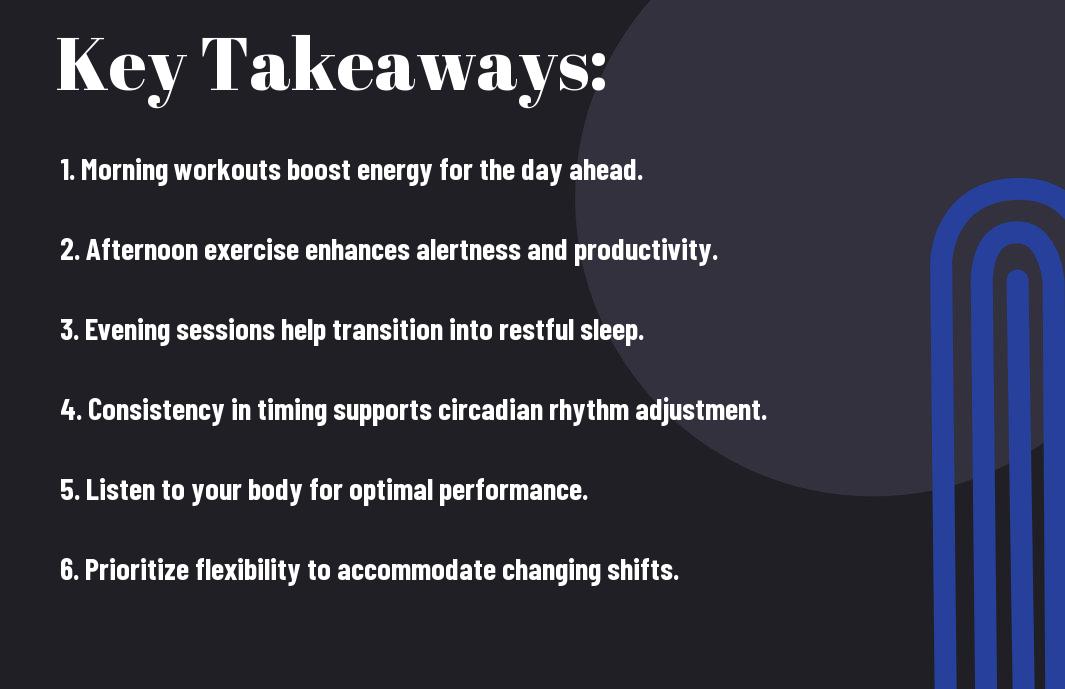
Ultimately, finding the best time to exercise as a shift worker depends on your unique schedule and personal preferences. You may find early morning workouts energizing or late-night sessions a perfect way to unwind. The key is to listen to your body, prioritize consistency, and adapt your routine as necessary. For more tips on managing your fitness while navigating shift work, check out Fitting in Fitness on a Shifty Schedule.
Q: What are the best times for shift workers to exercise given their irregular schedules?
A: Shift workers typically face unique challenges due to their varying schedules. The best times for them to exercise often depend on the individual's specific work hours and personal energy levels. For those working night shifts, exercising after work, when the body is still in a wakeful state, can be beneficial. Conversely, for day shift workers, exercising either before or after their shift tends to align better with natural body rhythms. It is important for shift workers to listen to their bodies and find a routine that fits their energy peaks, which may vary from person to person.
Q: How can shift workers maintain a consistent workout routine with their unpredictable schedules?
A: To maintain a consistent workout routine, shift workers should prioritize scheduling their exercise sessions just as they would any other important commitment. If possible, they can create a weekly exercise plan that accommodates their shifts. Flexibility is key; if they can't stick to the original schedule, shift workers can adapt by incorporating shorter workouts or breaking their workouts into manageable segments throughout the day. It's also helpful to set realistic fitness goals that can be adjusted based on shifts and energy levels.
Q: Are there specific types of workouts that are more effective for shift workers?
A: Yes, certain types of workouts can be particularly effective for shift workers. High-intensity interval training (HIIT) is a popular option as it provides a full workout in a shorter timeframe, making it easier to fit into a busy schedule. Strength training can also be beneficial, as it helps boost metabolism and muscle mass, which can counteract the sedentary nature of certain shifts. Additionally, incorporating yoga or stretching routines can promote relaxation and help manage stress, which is quite beneficial for workers with irregular hours.
Recent Posts
It's important to evaluate whether Beachbody On Demand continues to meet your fitness needs as we enter 2025. With a range of workout programs and nutrition plans, the platform claims to cater to...
Just like having a personal trainer at your fingertips, Beachbody On Demand offers you an extensive library of on-demand workout programs accessible anytime, anywhere. This service allows you to...