
Embarking on a fitness journey can be both exhilarating and daunting, especially when it comes to cardiovascular exercise. As a beginner, the prospect of sweating it out on a treadmill or pounding the pavement can seem intimidating. However, with the right approach and mindset, you can unlock the incredible benefits of cardio workouts and set yourself on a path towards a healthier, more active lifestyle.
Cardiovascular exercise, or “cardio” for short, is essential for maintaining good overall health. By elevating your heart rate and increasing blood flow, cardio workouts provide your body with an abundance of oxygen, strengthening your heart and lungs. Regular cardio can also assist in weight management, improve sleep quality, and reduce the risk of chronic diseases, making it a crucial component of a well-rounded fitness routine.
Key Takeaways
- Cardiovascular exercise is vital for overall health, providing benefits such as weight loss, improved sleep, and reduced chronic disease risk.
- Beginner-friendly cardio exercises like walking, cycling, and swimming are accessible and can be done at home.
- Setting realistic goals and gradually increasing intensity and duration are key to a successful cardio routine.
- Proper equipment, safety precautions, and a balanced approach to cardio and strength training are essential for beginners.
- Consistency and finding enjoyment in your cardio activities are crucial for long-term success in your fitness journey.
Understanding the Basics of Cardiovascular Exercise
Cardiovascular exercise, often referred to as cardio, is any physical activity that elevates your heart rate and keeps it elevated for an extended period. This type of exercise is essential for maintaining heart health, improving endurance, and boosting overall fitness. Whether you're a beginner or an experienced athlete, understanding the fundamentals of cardio can help you develop a well-rounded fitness routine.
What Qualifies as Cardio Exercise?
A wide range of activities can be classified as cardio exercises, including:
- Walking
- Cycling
- Swimming
- Running
- Aerobic dance
- Rowing
- Stair climbing
- Dancing
Benefits for Beginners
Incorporating cardio into your fitness regimen offers numerous benefits for beginners, such as:
- Improved heart health and reduced risk of cardiovascular disease
- Increased endurance and energy levels
- Better weight management and overall fitness
Setting Realistic Expectations
When starting a new cardio routine, it's important to set realistic expectations. Gradual progress and consistency are key, as your body adapts to the increased physical demands. With patience and dedication, you'll see improvements in your aerobic exercise performance and overall heart health.
“Cardiovascular disease claims 17.9 million lives each year, making it the world's biggest killer.”
Getting Started: Essential Equipment and Safety Guidelines
Starting a new cardiovascular exercise routine can be an exciting journey, but ensuring you have the right equipment and follow proper safety guidelines is crucial for your success and well-being. Let's explore the essential gear and precautions to keep in mind as you embark on your fitness adventure.
Workout Gear: Comfort and Support
Invest in comfortable, breathable workout gear that allows for easy movement. Look for moisture-wicking fabrics and well-fitted clothing that won't restrict your range of motion. Proper footwear is especially important – choose supportive, exercise-specific shoes with good shock absorption to protect your joints and prevent injuries.
Safety First: Warm-ups, Cool-downs, and Hydration
Before starting any exercise routine, be sure to warm up with dynamic stretches to prepare your body. After your workout, slow down with a cool-down period and static stretches to aid recovery. Staying hydrated throughout your session is also crucial, so have a water bottle on hand and take breaks to sip water as needed.
If you have any pre-existing medical conditions or concerns, it's always best to consult with a healthcare provider before starting a new exercise program. They can offer personalized guidance and ensure your safety as you embark on your fitness journey.
| Essential Equipment | Safety Guidelines |
|---|---|
|
|
By prioritizing the right workout gear and following essential safety guidelines, you can set yourself up for a successful and enjoyable cardiovascular exercise experience. Remember, taking care of your body should always be the top priority as you work towards your fitness goals.
Cardiovascular Workouts for Beginners: Your First Steps
Embarking on a fitness journey can feel daunting, but with the right approach, beginner cardio workouts can become an empowering part of your routine. Whether you're aiming to improve your cardiovascular fitness, aid in weight loss, or simply establish healthy habits, these accessible exercises are designed to help you get started.
Walking Programs
One of the simplest yet most effective beginner cardio workouts is walking. Start with a 13-minute program, alternating between 3 minutes of an easy pace and 1 minute of a brisk pace. As you progress, gradually increase the duration and intensity of your walks, ultimately working your way up to 30-45 minutes of moderate-paced walking most days of the week.
Stationary Bike Routines
For those seeking low-impact cardiovascular fitness, stationary bike routines offer a versatile option. Aim for a 10-minute session, pedaling at a moderate resistance to keep your heart rate elevated without straining your joints.
Elliptical Training Basics
The elliptical machine provides a full-body, low-impact cardio workout that's easy on the joints. Begin with just 10-15 minutes, focusing on maintaining proper form and a steady pace. As you become more comfortable, gradually increase the duration and resistance to challenge yourself.
Remember, the key to successful beginner cardio workouts is to start slow, listen to your body, and celebrate small victories. With consistency and patience, you'll be well on your way to improving your cardiovascular fitness and overall health.

Understanding Exercise Intensity and Rate of Perceived Exertion (RPE)
When it comes to cardiovascular exercise, understanding exercise intensity is crucial for beginners. The Rate of Perceived Exertion (RPE) scale is a simple and effective tool to help you gauge the intensity of your workouts and track your progress.
The Borg RPE scale rates exertion from a scale of 6 (no exertion) to 20 (maximum effort), with a rating between 12 to 14 typically reflecting a moderate or somewhat hard level of intensity. The modified Borg CR10 RPE scale measures exertion on a scale of 0 (no exertion or resting) to 10 (pushing yourself to the max).
Healthcare providers, such as cardiologists, cardiac rehab specialists, exercise physiologists, physical therapists, and pulmonologists, use RPE scales to evaluate heart and lung health, overall fitness, and diagnose certain heart conditions during stress tests. While RPE scales provide good estimates of physical effort and exertion, there may be discrepancies based on individual perception and fitness level.
For beginner-friendly cardiovascular workouts, you'll want to aim for RPE levels between 1 to 4 for light to moderate activities, and 5 to 8 for more vigorous exercises. On the Borg scale, a moderate-intensity level (12 to 14) corresponds to RPE levels of 4 to 6, while vigorous activity (15 to 17) aligns with RPE levels of 6 to 8.
| RPE Scale | Intensity Level | Perceived Exertion |
|---|---|---|
| 1-4 | Light to Moderate | Easy to Somewhat Hard |
| 5-8 | Vigorous | Hard to Very Hard |
| 12-14 | Moderate | Somewhat Hard |
| 15-17 | Vigorous | Hard |
In addition to the RPE scale, you can also use heart rate monitoring or the talk test to gauge your workout intensity. By understanding your workout intensity and using the RPE scale, you can ensure that you're pushing yourself effectively without overexerting during your cardiovascular exercises.
Low-Impact Cardio Options for Newcomers
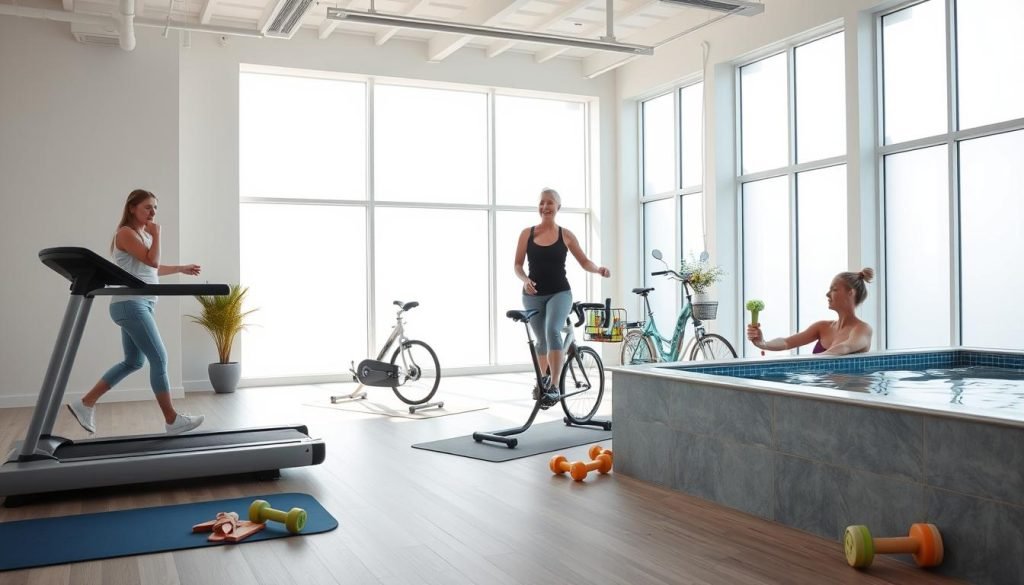
If you're new to exercise or have joint concerns, low-impact cardio workouts can be an excellent starting point. These joint-friendly exercises not only provide cardiovascular benefits but also minimize the stress on your joints. Let's explore some beginner-friendly low-impact cardio options that can help you kickstart your fitness journey.
Swimming Basics
Swimming is a fantastic low-impact cardio exercise that engages your entire body. As you glide through the water, you'll work your muscles without putting excessive strain on your joints. Swimming is especially beneficial for individuals with conditions like arthritis or recent injuries, as the water's buoyancy supports your body and reduces the impact on your joints.
Cycling Fundamentals
Cycling, whether on a stationary bike or outdoors, is another joint-friendly cardio option. It's a low-impact exercise that strengthens your leg muscles, including your quadriceps, hamstrings, and calves, while also providing a cardiovascular workout. Stationary cycling allows you to control the intensity and can be a great beginner-friendly option, while outdoor cycling offers the added benefit of fresh air and scenic routes.
Elliptical Machine Workouts
The elliptical machine is a popular choice for low-impact cardio. It mimics the motion of walking or running without the high-impact stress on your joints. The elliptical provides a full-body workout, engaging your legs, core, and upper body. By adjusting the resistance and incline, you can tailor the intensity to your fitness level, making it a versatile option for beginners and experienced exercisers alike.
Incorporating these low-impact cardio exercises into your routine can help you build cardiovascular endurance, improve overall fitness, and reduce the risk of injury, especially as you're starting your fitness journey. Remember to listen to your body, gradually increase the intensity, and consult with a healthcare professional if you have any specific concerns.
Building Your First 20-Minute Cardio Routine
Embarking on a cardio workout plan can be daunting for beginners, but don't worry – we've got you covered. Our 20-minute beginner exercise routine is designed to gradually build your cardiovascular endurance without overwhelming you.
The routine consists of a warm-up, a 20-minute low-impact cardio circuit, and a cool-down. The cardio circuit features 6 exercises, each performed for 1 minute, with a 1-minute rest between rounds. Participants will repeat the circuit three times, providing a challenging yet manageable 20-minute workout.
- Start with a 2-minute warm-up, such as marching in place or light jogging.
- Perform the 6-exercise circuit, resting for 1 minute between rounds:
- Jumping jacks
- High knees
- Squats
- Side lunges
- Tricep dips
- Plank jacks
Remember, the key to success is consistency. Aim to incorporate this cardio workout plan into your routine 2-3 times per week, and gradually increase the intensity as you build endurance. And always consult a healthcare professional before starting any new exercise program.
| Exercise | Time | Repetitions |
|---|---|---|
| Jumping jacks | 1 minute | As many as possible |
| High knees | 1 minute | As many as possible |
| Squats | 1 minute | As many as possible |
| Side lunges | 1 minute | As many as possible |
| Tricep dips | 1 minute | As many as possible |
| Plank jacks | 1 minute | As many as possible |
“The key to success is consistency. Aim to incorporate this cardio workout plan into your routine 2-3 times per week, and gradually increase the intensity as you build endurance.”
Progressive Training: Moving from Beginner to Intermediate
Embarking on your fitness journey is an exciting step, and as you become more comfortable with cardiovascular exercise, it's time to consider progressive training to take your workouts to the next level. Transitioning from a beginner to an intermediate fitness routine involves strategic adjustments to your workout regimen, focusing on increasing duration, adding intensity, and incorporating interval training to build endurance and fitness progression.
Increasing Duration
One common approach for transitioning to an intermediate workout routine is to gradually increase the duration of your cardio sessions. This can be achieved by adding 5-10 minutes to your current workout, slowly building up to 30-45 minutes of continuous exercise. This steady increase in duration will help you develop greater endurance building and cardiovascular stamina over time.
Adding Intensity
As you become more comfortable with your cardio routine, consider ways to increase the intensity of your workouts. This can involve adjusting the speed, resistance, or incline on your chosen equipment, such as a treadmill or stationary bike. Alternatively, you can incorporate intervals of higher-intensity bursts followed by periods of active recovery to challenge your body and promote interval training.
Incorporating Intervals
Interval training is a highly effective strategy for intermediate-level cardio workouts. This method alternates periods of high-intensity exercise with periods of lower-intensity recovery or active rest. By incorporating intervals, you can push your body to its limits, improve endurance building, and see significant gains in your cardiovascular fitness.
Remember, progressive training is all about finding the right balance between challenge and recovery. Listen to your body, track your progress, and make gradual adjustments to your routine to ensure a safe and sustainable transition from a beginner to an intermediate fitness level.
“The journey of a thousand miles begins with a single step.” – Lao Tzu
Combining Cardio with Other Forms of Exercise
Crafting a balanced fitness routine that incorporates both cardio and strength training can amplify the benefits of your workout regimen. By cross-training, you can unlock synergistic effects that optimize overall fitness and health.
The recommended guidelines suggest at least 150 minutes of moderate-intensity or 75 minutes of vigorous-intensity aerobic activity per week, coupled with strength training sessions at least two days per week. This well-rounded approach not only improves cardiovascular endurance but also builds muscle strength, boosts metabolism, and reduces the risk of chronic diseases like heart disease, diabetes, and arthritis.
A recent study conducted by Iowa State University, involving 406 participants between 35 and 70 years old, found that splitting the recommended physical activity between aerobic and resistance exercise can be just as effective as an aerobic-only regimen in reducing cardiovascular disease risks. The combination exercise group showed improvements in both aerobic fitness and muscular strength compared to the other groups.
| Exercise Type | Benefits |
|---|---|
| Cardio | Improves cardiovascular endurance and heart health |
| Strength Training | Stimulates muscle growth, increases strength, and boosts metabolism |
| Combined Cardio and Strength Training | Accelerates fat loss and optimizes calorie expenditure |
To get started, begin with a gradual approach, slowly building up the intensity and duration of your workouts to prevent injury. Proper recovery between sessions is also crucial to avoid overtraining and promote muscle repair and growth. By adapting your routine and listening to your body's signals, you can evolve your balanced fitness program and achieve your health and fitness goals.
“Combining cardio and strength training can lead to a higher overall calorie burn compared to doing each type of exercise alone.”
Common Mistakes and How to Avoid Them
Embarking on a cardiovascular exercise journey can be an exciting and rewarding experience, but it's important to be mindful of common mistakes that can hinder your progress. From exercise form issues to intensity management and recovery mistakes, addressing these pitfalls can help you achieve your fitness goals more effectively.
Form Issues
Proper exercise form is crucial to avoid injuries and maximize the benefits of your workouts. Improper form in activities like running, cycling, or using elliptical machines can lead to muscle strains, joint pain, and even long-term damage. It's essential to focus on maintaining correct posture, technique, and joint alignment throughout your cardio sessions.
Intensity Management
One common mistake is starting your cardio routine too intensely, leading to early fatigue and burnout. It's important to gradually increase the intensity of your workouts, allowing your body to adapt and build endurance over time. Overtraining can also be detrimental, as it can result in decreased performance, injury, and burnout. Striking a balance between challenging yourself and allowing for proper recovery is key.
Recovery Mistakes
Neglecting the importance of recovery can hinder your progress and increase the risk of injury. Failing to take rest days, not getting enough sleep, and not fueling your body with proper nutrition can all impede your body's ability to recover and adapt to your workouts. Incorporating active recovery activities, like gentle stretching or light walking, along with adequate rest and nourishment, can help you avoid these pitfalls.
By being mindful of these common mistakes and taking the necessary steps to address them, you can create a sustainable and effective cardiovascular exercise routine that supports your fitness goals. Consistency, proper form, and a balanced approach to intensity and recovery are essential for long-term success.
Conclusion: Your Journey to Cardiovascular Fitness
As you embark on your journey towards improved cardiovascular fitness, remember that consistency and patience are key. While the benefits of regular cardio exercise may not be immediately visible, the long-term impact on your overall health and well-being can be truly transformative.
Whether your long-term fitness goals include weight management, reduced risk of chronic diseases, or simply feeling more energized and vibrant, incorporating cardiovascular workouts into your routine can help you achieve them. The cardio benefits extend far beyond just heart health, as regular exercise can also boost mood, improve sleep, and enhance cognitive function.
Stay motivated by focusing on the health improvement you'll experience over time. As you gradually increase the duration and intensity of your cardio sessions, you'll notice your endurance, strength, and overall fitness levels steadily improving. Embrace the journey, celebrate your milestones, and enjoy the feeling of becoming a healthier, more active version of yourself.
FAQ
What is considered cardiovascular exercise?
Cardiovascular exercise, or cardio, refers to any physical activity that increases your heart rate and breathing rate. This includes activities like walking, cycling, swimming, and using an elliptical machine.
What are the benefits of cardio for beginners?
Cardiovascular exercise offers numerous benefits for beginners, including improved heart health, increased energy, and better weight management. It can also help build endurance and enhance overall fitness levels.
How can I set realistic goals for my cardio journey?
It's important for beginners to set achievable goals and understand that progress takes time. Start slow, focus on consistency, and gradually increase the duration and intensity of your workouts as you build endurance.
What essential equipment do I need for beginner cardio workouts?
The key essentials for beginner cardio workouts include comfortable, breathable clothing and well-fitted, supportive footwear. It's also important to stay hydrated during your workouts.
How do I measure the intensity of my cardio workouts?
The Rate of Perceived Exertion (RPE) scale is a useful tool for beginners to gauge workout intensity. Levels 3-6 on the RPE scale are typically recommended for cardiovascular exercise, but you can also use your heart rate or the talk test to monitor intensity.
What are some low-impact cardio options for beginners?
Swimming, cycling (both outdoor and stationary), and using an elliptical machine are excellent low-impact cardio options for beginners or those with joint concerns.
How can I structure a beginner-friendly 20-minute cardio routine?
A 20-minute cardio routine for beginners can include a warm-up, a main workout with varying intensities, and a cool-down. This allows you to start slowly and gradually progress over time.
How do I transition from a beginner to an intermediate level in cardio training?
To progress from beginner to intermediate, you can focus on safely increasing the duration and intensity of your workouts. This may include adding speed or resistance variations, as well as incorporating interval training to build endurance.
What are the common mistakes beginners make in cardio training?
Some common mistakes include issues with exercise form, starting too intensely, and not allowing for proper recovery. It's important to focus on proper technique, gradually increasing intensity, and incorporating rest and nutrition into your fitness regimen.
Source Links
- https://www.healthline.com/health/cardio-exercises-at-home
- https://www.hitonefitness.com/cardio-exercises-for-beginners-kickstart-your-fitness-journey/
- https://fitnesscfgyms.com/clermontflsouth/blog/fitness-tips/the-ultimate-guide-to-cardio-training-for-all-levels/
- https://www.verywellfit.com/exercise-for-beginners-cardio-exercise-1229578
- https://strengthmatters.com/cardio-for-beginners/
- https://skyterraya.com/cardio-101-the-basics-of-cardiovascular-fitness/
- https://www.mayoclinic.org/healthy-lifestyle/fitness/in-depth/fitness/art-20048269
- https://www.livestrong.com/article/13722485-cardio-for-beginners/
- https://www.nuffieldhealth.com/article/gym-workouts-for-beginners
- https://www.mutualofomaha.com/advice/health-and-well-being/staying-fit/5-exercises-for-a-cardio-workout-at-home
- https://www.womanandhome.com/health-wellbeing/cardio-exercises-for-beginners-to-boost-fitness/
- https://www.garagegymreviews.com/beginner-cardio-workout
- https://my.clevelandclinic.org/health/articles/17450-rated-perceived-exertion-rpe-scale
- https://www.healthline.com/health/RPE
- https://www.health.com/fitness/cardio-workouts/low-impact-cardio
- https://www.medicalnewstoday.com/articles/cardio-exercises-at-home
- https://www.healthline.com/health/fitness-exercise/low-impact-cardio
- https://www.ucdenver.edu/docs/librariesprovider65/clinical-services/sports-medicine/training-for-cardiovascular-fitness.pdf
- https://www.aworkoutroutine.com/beginner-to-intermediate/
- https://www.purefitness.com/blogs/one-hour-gym-workouts/
- https://vshred.com/blog/try-this-progressive-circuit-every-morning-catered-to-every-fitness-level/
- https://healthiapp.com/blog/the-advantages-of-combining-cardio-and-strength-training-for-optimal-weight-loss-results
- https://www.news.iastate.edu/news/2024/01/17/cardio-strength
- https://clearcals.com/blogs/combining-cardio-with-strength-training-for-optimal-results/
- https://coospo.com/blogs/knowledge/cardio-tips-for-newbies-common-mistakes-to-avoid?srsltid=AfmBOoqw9sLnR9wFxsFze0gI2r8tr9Jt_iPWnBcCgr_q922ZXQ35q6RH
- https://www.verywellfit.com/how-to-avoid-the-5-biggest-workout-mistakes-3495983
- https://www.spin.ph/life/active-lifestyle/10-most-common-cardio-mistakes-and-how-to-prevent-them-a5157-20230315
- https://pmc.ncbi.nlm.nih.gov/articles/PMC6481017/
- https://www.linkedin.com/pulse/science-behind-effective-cardio-workouts-maximizing-your-hicks-x1dke
- https://www.abbott.com/corpnewsroom/healthy-heart/cardiovascular-fitness–what-it-means-to-your-heart-health.html
Recent Posts
It's important to evaluate whether Beachbody On Demand continues to meet your fitness needs as we enter 2025. With a range of workout programs and nutrition plans, the platform claims to cater to...
Just like having a personal trainer at your fingertips, Beachbody On Demand offers you an extensive library of on-demand workout programs accessible anytime, anywhere. This service allows you to...